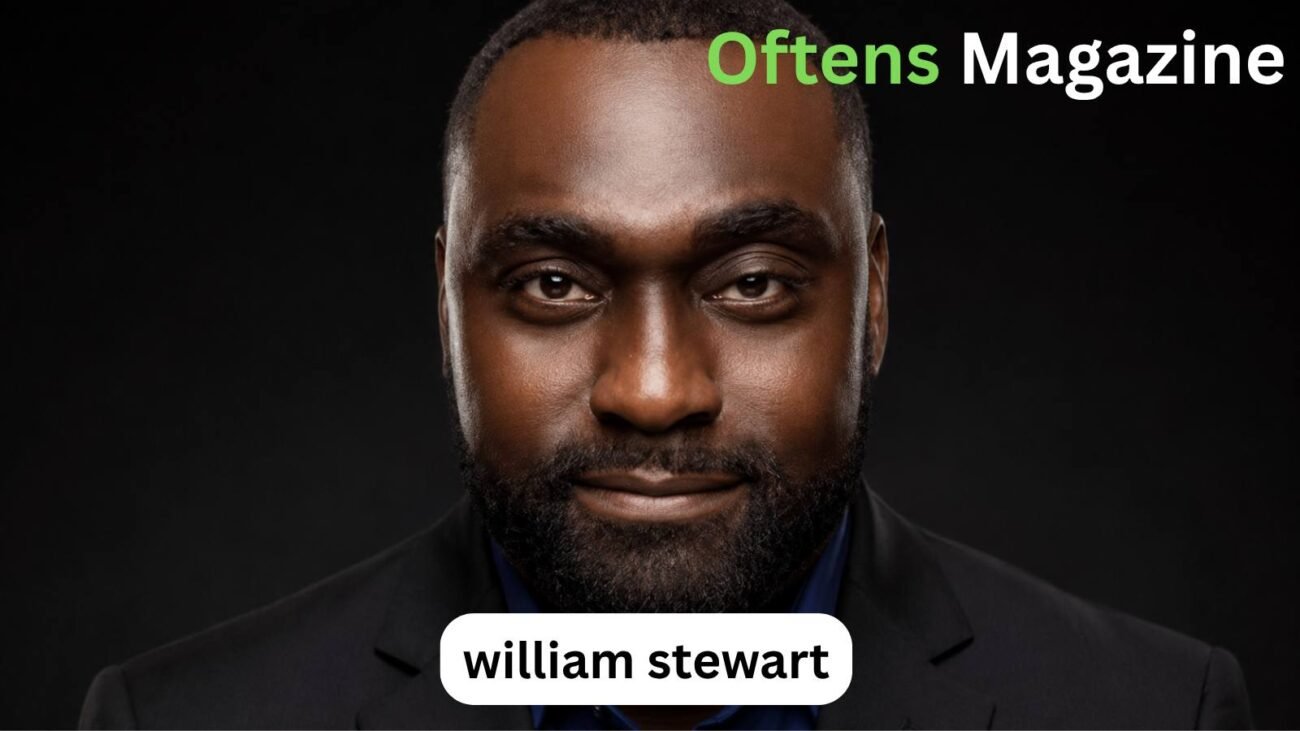
William Stewart is a name that most people would never have encountered if not for a single chapter in a best-selling memoir. He is a U.S. Army veteran who later built a career in corporate security and investigations, far removed from the entertainment industry. In 2008, he married a struggling comedian named Tiffany Haddish, and by many accounts, he played a meaningful role in her life he even used his investigative skills to track down her estranged father so the man could walk her down the aisle. Their marriage ended in divorce finalized in 2013, closing a chapter that seemed, at the time, to be a private matter between two people moving on with their lives.
That privacy vanished in 2017 when Haddish published The Last Black Unicorn. The memoir included a chapter titled “The Ex-Husband,” which described a man who was abusive, controlling, and stalker-like, though it never named Stewart directly. Because he was the only man she had ever married, the identification was immediate. Stewart responded with a defamation lawsuit seeking over one million dollars in damages, denying every allegation and offering his own account of their marriage including disputes over the timeline, a lost pregnancy, and the nature of behaviors Haddish portrayed as abuse. He later published a rebuttal book of his own and has largely retreated from public view, defined in the public eye almost entirely by a marriage and a legal fight that outlasted it.
William Stewart Quick Bio
| Category | Details |
| Full Name | William Stewart |
| Known For | Tiffany Haddish’s ex-husband; sued her over her memoir |
| Nationality | American |
| Age | Reported 59 (2026); other sources say born 1978/1979 — unconfirmed |
| Military | U.S. Army veteran |
| Career | Corporate security at Farmer John, Nestle, Paramount; later a private investigator |
| Marriage | Married Haddish 2008; divorced 2013 |
| Children | None confirmed with Haddish |
| Book | Trust, Lies, and Deceit (2022) |
| Lawsuit | Sued Haddish, Tucker Max, Simon & Schuster (2018); sought $1M+; outcome unclear |
William Stewart’s Background and Military Service
William Stewart is an American Army veteran whose early life and military service remain largely out of the public eye. What is known is that he served in the U.S. military before transitioning into civilian life, a background that later shaped how he approached his career and how he handled the very public dispute that would come to define him. His military tenure and rank have not been detailed in any major reporting, leaving that chapter of his life mostly private. What stands out is that Stewart built his post-military life with a focus on discipline and structure, qualities that would later be tested when his personal life became entangled in a celebrity memoir.
After leaving the military, Stewart entered the workforce and steadily climbed into corporate security and safety roles. He worked as a safety supervisor at a plant, moved into corporate security at Nestle, and eventually landed a position at Paramount Pictures, where he was described as one of the few Black executives at the company. This professional trajectory shows a man who built his career step by step rather than seeking fame or attention. His military service gave him a foundation, but his later work in security and investigations became the backdrop against which his marriage and its aftermath would later be judged.
The section shows that William Stewart is a military veteran who built a quiet professional life, far removed from the entertainment world that later pulled him into the spotlight.
William Stewart’s Career and Professional Life
William Stewart’s career path reflects a steady climb through corporate security and safety roles rather than a pursuit of public recognition. Before his name became linked to Tiffany Haddish’s memoir, Stewart worked in safety and security positions at companies including Farmer John and Nestle, eventually joining Paramount Pictures in a corporate security capacity. Those who knew him during that period described him as a hardworking professional who earned his position through persistence. His work in security and investigations gave him skills in research and fact-finding, tools he would later rely on when his personal life became a public controversy.
What makes Stewart’s professional story notable is how his career became a weapon in the legal dispute that followed. In Haddish’s memoir, behaviors that Stewart says were part of his professional skill set as a private investigator were reframed as stalking. His work in security and investigations, which had been a source of pride and stability, became evidence in a narrative he had no control over. After the lawsuit, Stewart largely retreated from the public eye, and details about his current professional activities remain sparse, though reports suggest he has continued to focus on his career and family life away from Hollywood.
The section shows that Stewart built a respectable career in corporate security, only to see his professional skills twisted into accusations against him.
How William Stewart Met Tiffany Haddish
The story of how William Stewart met Tiffany Haddish has a romantic quality that stands in sharp contrast to everything that followed. According to accounts of their relationship, the two met on a plane in 2001, long before Haddish became a household name. At the time, Haddish was a struggling comedian, and Stewart was an Army veteran building his life in corporate America. Their connection grew over time, and Stewart became someone Haddish relied on during a difficult period in her life. What drew them together, by Haddish’s own later account, was Stewart’s stability and work ethic, qualities she admired in a partner who seemed to offer something different from the instability she had known.
The most significant gesture Stewart made during their courtship came before their wedding. Haddish had been estranged from her father, and Stewart used his investigative skills to track the man down so he could walk his daughter down the aisle. Haddish later described that moment as one of the happiest days of her life. It was a act of care that showed Stewart’s commitment to her, and it became a defining memory of their relationship, one that Haddish held onto even as the marriage later fell apart.
The section shows that Stewart and Haddish’s relationship began with genuine care and a meaningful gesture that Haddish never forgot.
William Stewart and Tiffany Haddish’s Marriage
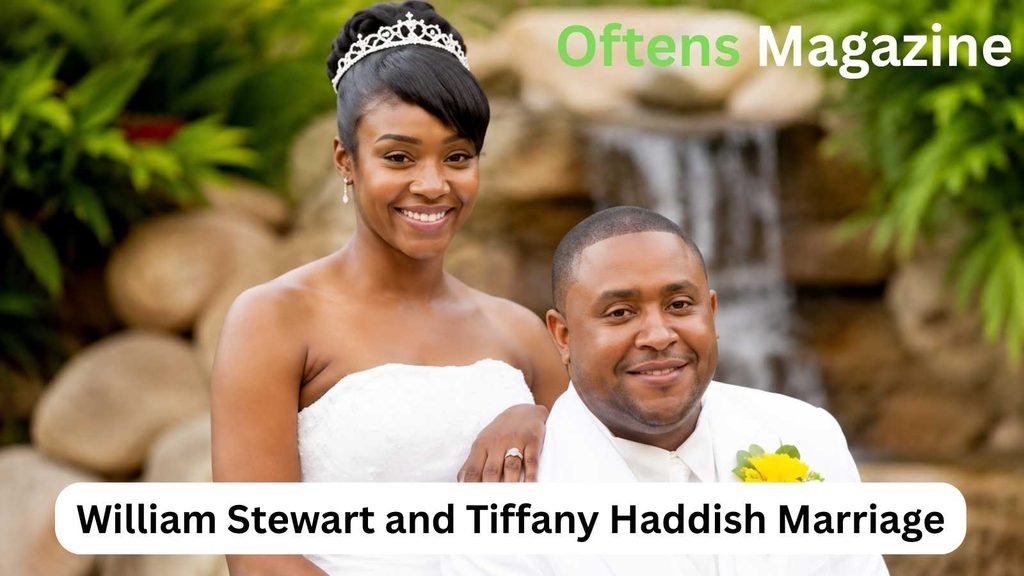
William Stewart and Tiffany Haddish married in 2008, when Haddish was twenty-nine years old. The wedding itself was made possible by Stewart’s efforts to reunite Haddish with her father, and the day was remembered by Haddish as one of the happiest of her life. For a time, the marriage seemed to offer Haddish the stability she had lacked, and Stewart continued to build his career in corporate security while Haddish pursued her comedy ambitions. Outwardly, they appeared to be a couple navigating the challenges of building careers and a life together.
But the marriage was not as stable as it appeared. Accounts of their time together describe a relationship marked by conflict and tension, with both sides later offering very different versions of what happened behind closed doors. Haddish filed for divorce in 2011, though the legal process was not finalized until 2013. There is also a dispute about the timeline itself: Haddish has said they married and divorced twice, while Stewart’s legal filings stated it was one continuous marriage from 2008 to 2013. That disagreement over something as basic as the shape of their union hints at how differently the two experienced and remembered the same years.
The section shows that Stewart and Haddish’s marriage began with hope and connection but was marked by conflict that led to divorce.
Why Their Marriage Ended
The marriage between William Stewart and Tiffany Haddish ended with Haddish filing for divorce in 2011, though the split was not finalized until 2013. From Haddish’s perspective, the marriage became unbearable due to abuse. In her memoir and in statements she made afterward, she described a pattern of physical and emotional mistreatment that she said escalated over time. She claimed that Stewart was controlling, that he grabbed her and threw her into walls, and that the violence she endured contributed to the loss of a pregnancy. These allegations, once made public, became the foundation for everything that followed.
Stewart has consistently and categorically denied every accusation. His version is that Haddish’s account distorted the reality of their marriage, that she had an abortion rather than a miscarriage, and that behaviors she characterized as abuse were either exaggerated or fabricated. He also claimed that Haddish herself had been physically aggressive toward him during their relationship. The two narratives cannot both be true, and neither has been conclusively proven in a court of law. What is clear is that the marriage ended in a way that left both parties with deep wounds and very different stories about what happened.
The section shows that the end of the marriage produced two irreconcilable accounts, one of abuse and one of false accusations.
The Controversy Surrounding Tiffany Haddish’s Memoir
When Tiffany Haddish published her memoir The Last Black Unicorn in 2017, it included a chapter titled “The Ex-Husband.” Haddish did not name Stewart in the chapter, but because he was the only man she had ever married, the identification was immediate and unmistakable. In the chapter, Haddish described a man who was abusive, who choked her, who kidnapped her, and who stalked her after their relationship ended. She also wrote that the abuse caused her to lose an unborn child. The book was a bestseller, and the chapter became one of its most talked-about sections.
The publication of the memoir set off a chain of events that neither Haddish nor Stewart could have fully anticipated. Haddish herself later acknowledged that some stories in the book may have been exaggerated during the editing process, saying that she had to correct certain details when recording the audiobook. Stewart, for his part, went on social media and gave interviews denying everything. He said he had never hit a woman, that he had documents proving Haddish had an abortion rather than a miscarriage, and that his character had been destroyed for profit. The controversy turned a private divorce into a public spectacle, with each side accusing the other of lying.
The section shows that a single chapter in Haddish’s memoir transformed a private divorce into a public battle over truth and reputation.
William Stewart’s Defamation Lawsuit Against Tiffany Haddish
In response to the memoir, William Stewart filed a defamation lawsuit seeking more than one million dollars in damages. The suit named not only Haddish but also her co-author Tucker Max and the publisher Simon & Schuster, arguing that all three were responsible for spreading false and damaging claims. Stewart’s legal team contended that the abuse allegations were fabricated for commercial gain, that his work as a private investigator was deliberately reframed as stalking, and that the book’s portrayal of him had caused irreparable harm to his reputation and his family. The lawsuit became one of the most closely watched celebrity defamation cases of its time, raising questions about where the line falls between personal storytelling and malicious falsehood.
The legal battle dragged on for years. The defendants tried to have the case dismissed, but a judge allowed it to proceed, and a trial date was eventually set. Stewart’s attorneys argued that the publisher and co-author bore significant responsibility, pointing to a pattern of prioritizing sensational content over accuracy. Haddish’s side maintained that the memoir was her truth and that she had not intended to harm Stewart. As the years passed, the case faced delays and setbacks, and no final verdict was ever clearly reported in major outlets. What remains is a dispute that neither side has fully escaped, a legal fight that outlasted the marriage it grew out of.
The section shows that Stewart fought back through the courts, turning a memoir controversy into a prolonged legal battle over truth and accountability.
How the Legal Dispute Was Resolved
The resolution of William Stewart’s defamation lawsuit against Tiffany Haddish is not something that can be stated with certainty. The case was filed in 2018, and for a time it moved forward, with a trial date set and procedural victories for Stewart. But as the years went on, updates became scarce, and the COVID-19 pandemic caused significant delays in court proceedings. Some reports suggest that the two sides may have reached an out-of-court settlement, pointing to the lack of any further court filings or public progress on the case. Other accounts claim that Stewart eventually won a verdict, though those reports come from outlets that cannot be independently confirmed and have not been echoed by major news organizations.
What is clear is that the legal dispute did not end with a dramatic public reckoning. There was no widely reported trial, no definitive ruling that settled the question of who was telling the truth. Instead, the case seemed to fade from public view, leaving the allegations and denials in a kind of unresolved tension. For Stewart, that ambiguity may be its own kind of frustration. For Haddish, the silence may represent a closing of a painful chapter. Either way, the absence of a clear resolution means that the question of what really happened between them remains open, at least in the public record.
The section shows that the legal battle ended without a clear public resolution, leaving the truth of the allegations unsettled.
What Is Known About William Stewart’s Life Today?
Today, William Stewart remains largely outside the public eye, living a life that has moved on from the celebrity controversy that once consumed it. He is described as being in his late fifties, and reports indicate that he has continued to focus on his career and his family, particularly his mother, Elnora Daugherty, whom he cited as a motivating force behind his lawsuit. Stewart has not pursued further public attention, and he has not given interviews or made statements about Haddish in recent years. His life appears to have returned to the privacy he once enjoyed, though the shadow of the memoir and the lawsuit may never fully disappear.
Stewart did publish a book of his own, Trust, Lies, and Deceit: The Real Tiffany Haddish Revealed, in 2022, offering his side of the story in his own words. Beyond that, details about his daily life, his current work, and his relationships remain unknown. He has not remarried publicly, and there is no indication that he seeks any kind of continued connection to the entertainment world. For a man whose name became known because of someone else’s story, Stewart seems to have chosen to live the rest of his life on his own terms, away from the cameras and the headlines.
The section shows that Stewart has returned to a private life, choosing to move forward rather than remain defined by the controversy.
Frequently Asked Questions
1. Was William Stewart Married to Tiffany Haddish?
Yes, William Stewart and Tiffany Haddish were married in 2008.
2. When Did William Stewart and Tiffany Haddish Divorce?
Tiffany Haddish filed for divorce in 2011, and it was finalized in 2013.
3. What Is William Stewart Known For?
He is known as Tiffany Haddish’s former husband and for his defamation lawsuit over her memoir The Last Black Unicorn.
4. What Was William Stewart’s Role in the Memoir Lawsuit?
Stewart filed a lawsuit against Haddish and others, alleging that the memoir contained defamatory claims.
5. What Is William Stewart’s Net Worth?
His net worth has not been reliably established, so online estimates should be treated with caution.
Conclusion
William Stewart’s story is one of those lives that became public almost by accident. He was a military veteran who built a quiet career in corporate security, married a struggling comedian, helped her find her father, and then watched as that same woman became famous and wrote a book that painted him as a monster. Whether the portrait was accurate or not is something that no court has definitively decided. What remains is a man who fought back, not with headlines or interviews, but with a lawsuit and a book of his own, insisting that there was another side to the story.
His life today is far from the spotlight, defined more by what he has chosen not to do than by what he has done. He has not chased fame, has not continued to attack Haddish publicly, and has not tried to turn his notoriety into a new career. Instead, he seems to have retreated into the privacy that was taken from him for a time. The controversy may always be attached to his name, but it does not appear to be the whole of who he is. For a man whose story was told by someone else first, that may be the most important thing of all.
