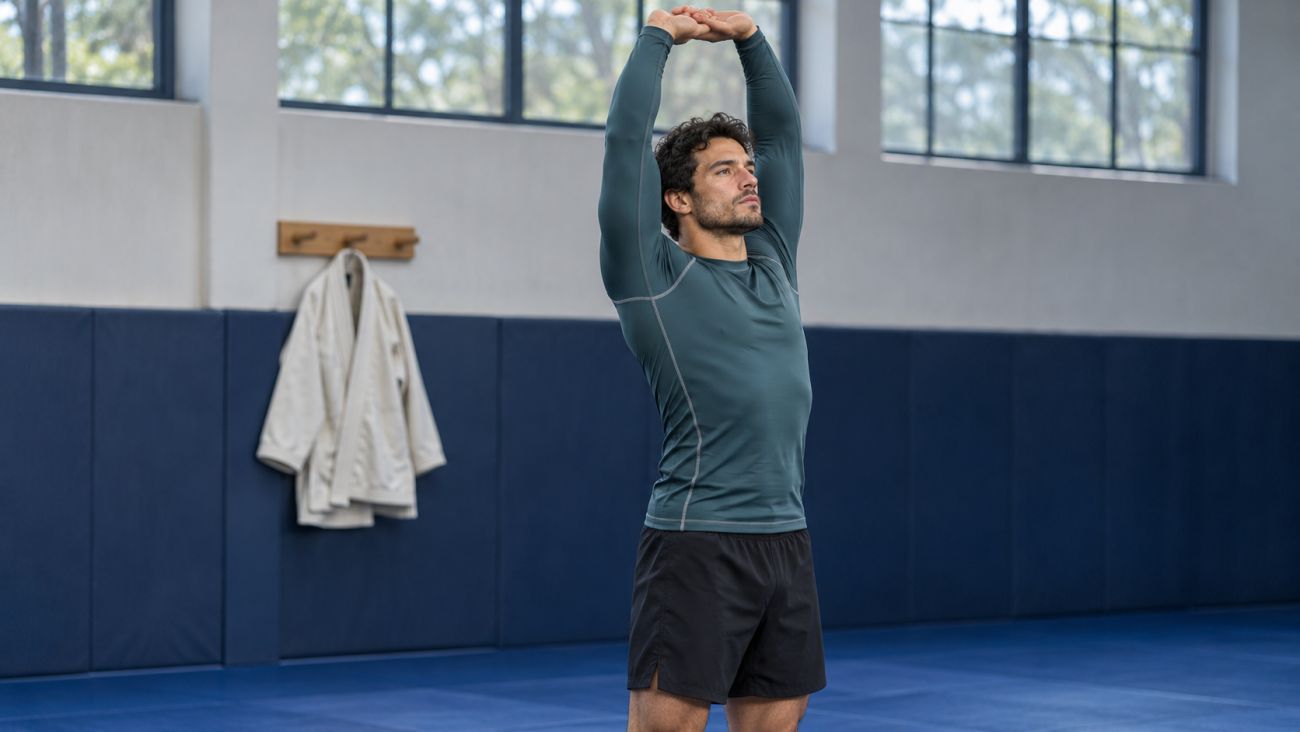
A rash guard can feel comfortable when you first put it on and still get in your way during a round. The hem might roll up as you turn onto your side, or the neck might pull when you reach for your partner’s wrist. Those small fit problems will matter more after a few classes than the print you liked when you bought it.
Start with where you’ll wear the shirt. A BJJ rashguard for an ordinary no-gi class can give you more freedom in style than one you’ll take to a tournament. If you plan to wear it under a gi, the collar, seams, and sleeve length deserve a closer look. Once you know the job, you can compare shirts by how they fit, how they’re made, and whether they work with the rest of your kit.
What is a BJJ rash guard?
A BJJ rash guard is a close-fitting stretch shirt made for grappling. It covers the torso and part or all of the arms. In no-gi Brazilian jiu-jitsu, it’s usually worn with grappling shorts, with spats as an option where gym or event rules allow. Its snug fit keeps loose cloth from bunching up as you move between positions. The fabric also puts a layer between covered skin and the mat or another person’s gear.
A fitted workout shirt can look similar. The differences worth checking are how far the hem reaches, how easily the fabric stretches across your shoulders, and where the seams sit. A shirt you like for lifting may ride up when you bring your knees to your chest or reach overhead. Compare those movements before deciding whether you need a grappling shirt or already own a top your gym allows.
Some products use the words compression fit. For everyday training, think of that as a description of how close the shirt sits. You should still be able to breathe, reach, and turn comfortably. A snug shirt that lets you focus on your partner is a better fit than one you keep pulling away from your neck.
Short sleeve or long sleeve?
A short-sleeve rash guard leaves more of your arms exposed. That can feel comfortable in a warm room or if you dislike fabric gathering at your wrists. Check where the sleeve ends when your arm is bent. A cuff that sits nicely with your arms at your sides can dig in once you flex your elbow or reach across your body.
A long-sleeve rash guard gives you fabric coverage over the elbows and forearms. Some grapplers like the feel of that extra layer during drills. Others prefer it under a gi because they’d rather feel a smooth sleeve against the skin than the inside of a woven jacket. Check that the wrist opening stays in place when you reach and that the sleeve doesn’t bunch at the elbow. If you have long arms, look at a sleeve measurement alongside the chest size.
Climate can influence the choice, but so can the way you train. An afternoon class in a warm gym and an evening session in a cool room may call for different shirts. If you’ve only worn one sleeve length, borrow a clean top for a try-on or compare two cuts before buying several of the same style. When both feel good, choose the coverage you’re most likely to enjoy through a full class.
How a BJJ rash guard should fit
Use the brand’s chart for the exact shirt. Measure your chest with the tape level around your body, then check any waist or height guidance the maker provides. A medium from one brand may fit closer than a medium from another. If you’re comparing measurements from a shirt you own, confirm whether the chart lists body measurements or the dimensions of the garment laid flat. They describe different things.
When you try the rash guard on, reach both arms overhead. Then bring one arm across your chest and rotate your shoulders as you would during a warm-up. Check whether the neckline pulls and whether the fabric gives at the shoulders. The shirt should move with you. If you can see the fabric straining at the seams when you make an ordinary reach, compare the next size or a cut with more room across the upper back.
Try the shirt with the shorts you’ll wear. Bend forward, squat, then sit with your knees up. Look at how much of the hem still overlaps the waistband. This matters if you have a long torso or your shorts sit low. If the shirt rides up even when you move slowly, it may need more length. Sizing up can add length, but it can also leave extra cloth at the waist. Compare the shirt’s actual body length if you can.
Which construction details matter?
Many BJJ rash guards use a blend of polyester or nylon with elastane. Fabric blends can feel different even when they list similar fibers. Look at whether the shirt stretches in the directions you need and returns to shape after you let go. If you can try it on, pay attention to how the cloth feels when you twist or reach. The print and fabric weight are easier to compare once the shirt can pass those basic checks.
Feel the seams at the armpits, neck, and sides. A flatter seam may feel smoother under a gi jacket, but its placement matters too. A thick join that sits under the edge of your collar can bother you even if the rest of the shirt feels soft. Check the inside of the cuffs and the hem while you’re there. A silicone gripper on some models can help keep the shirt down. If you dislike how it feels or your shorts rub the same spot, a longer plain hem may suit you better.
If you like bright graphics, check how the design is applied. With sublimation, the design becomes part of the fabric surface, so there’s no raised print layer to feel when you rub a hand over it. An applied print can feel different as the shirt stretches. Look at a close-up or ask how the print is made if you plan to wear the rash guard under a jacket often.
Choosing a rash guard for competition
Tournament rules can be more specific than gym rules. A shirt marketed as ranked can use belt colors, but check the exact requirements for your event before you buy. The International Brazilian Jiu-Jitsu Federation specifies that a no-gi rash guard should be fitted and reach the shorts waistband. It also has rules about shirt colors and how belt rank appears. Those requirements can change, so use the rules in effect on your event date, especially for white and black belt divisions.
Look at the top, shorts, and any spats as a complete kit. Check your event’s rules on each piece and try them on together before packing. A change in shorts can affect how much skin the shirt covers when you move. The event may also review your shorts for length or hardware. If you already have a second set that meets the rules, bring it if your event allows you to change before inspection or a match.
You can wear a competition top to class first to see how it moves. One session can tell you whether the hem needs frequent adjustment or the collar feels tight once you start rolling. After washing it, check the fit again. If you plan to use it at a specific tournament, find out as early as you can whether your coach or the organizer can answer questions about the design.
How to wear a rash guard under a gi
Ask what your academy requires or permits before class. For an undershirt, a smooth neckline and a hem that doesn’t bunch under your belt are often worth more than a striking print. Try the full gi on over the shirt and tie the belt. Reach and sit back on your heels to see whether the two layers move together or pull against each other.
Long sleeves offer more coverage, while short sleeves leave fewer layers around the wrists. If the gym is warm, think about how the whole kit feels once you’ve warmed up. If you plan to wear the shirt in a gi tournament, check the rules for your specific division. A top you wear under your jacket at the gym may be subject to different requirements on event day.
How to wash and dry BJJ rash guards
Take the shirt out of your bag after class and wash it after each session. Start with the care label for the exact garment. If the label allows machine washing, use a cool wash and turn the shirt inside out. Keep it away from rough hook-and-loop fasteners or exposed zippers in the same load, since those can catch the stretch fabric. Follow the label’s guidance on detergents and drying.
If you hang the shirt to dry, give the cuffs and hem time to dry fully. Pack it only when those thicker areas feel dry to the touch. A second top can help if you train on back-to-back days or don’t have time for laundry before every class. Base the number you buy on your training schedule and wash routine. You can always add another after you know which size and sleeve length you like.
What to look for when you shop
When you compare BJJ rash guards at Strikers BJJ, check the size chart and look for photos of the neckline, sleeves, and hem. If you need a ranked design, match the colors to your event’s current rules. If you’re buying for class, think about what you already know from your training clothes. A shirt that fits your shoulders but rides up is a clue to look for a longer body, while a shirt that stays down but pulls at the neck may call for a different cut.
Once you find a top that stays comfortable through a round and works with the shorts or gi you already wear, you have a good reference for the next one. Write down the model and size and keep the fit details that worked for you. That makes it easier to tell whether a new design is worth a try the next time you shop.
