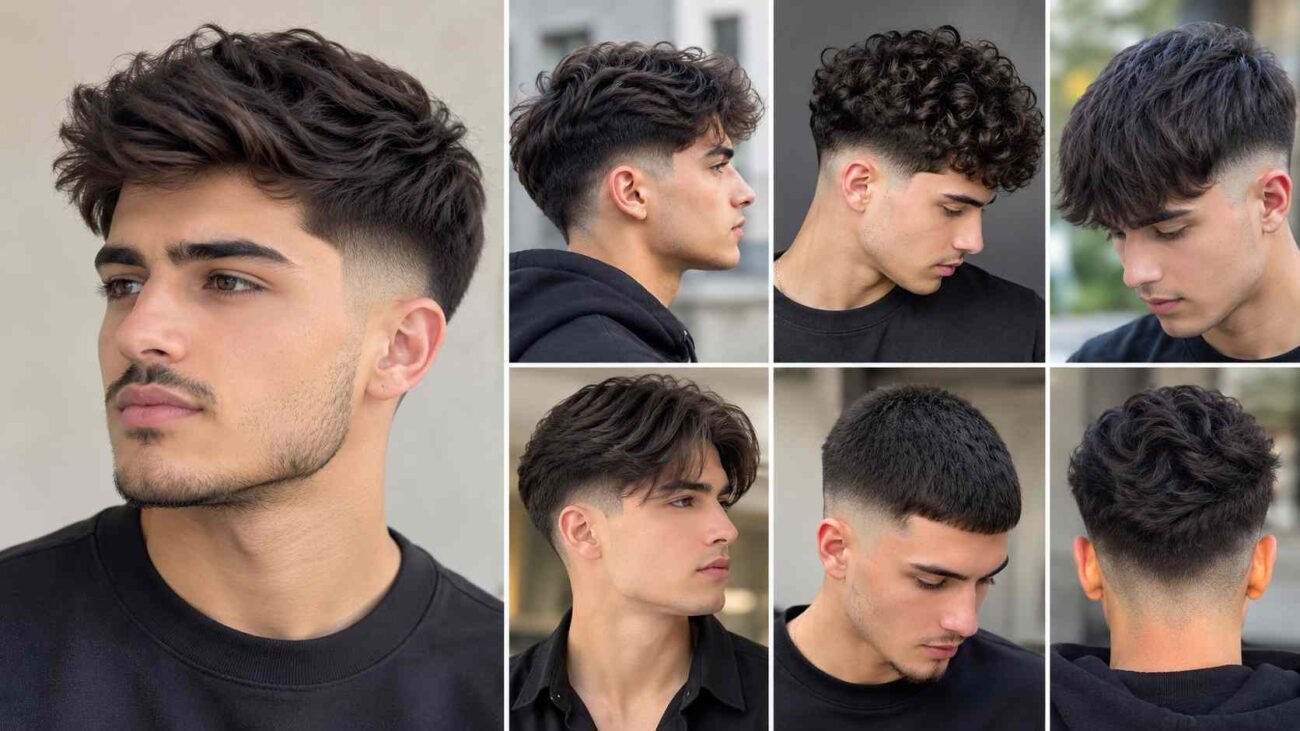
A low taper fade haircut is a popular choice for men who want a clean, stylish look without cutting the sides too short. It features a gradual taper around the ears and neckline, while the hair on top can be kept short, medium, or long. This makes it easy to match the haircut with different hair types, face shapes, and personal styles.
Whether you prefer a textured top, natural curls, a middle part, or a classic look, a low taper fade offers plenty of styling options. It also works well with a beard or a clean-shaven face, making it suitable for everyday wear, school, work and special occasions.
What Is a Low Taper Fade Haircut?
A low taper fade haircut is a clean, modern hairstyle that gradually shortens the hair around the sideburns and neckline while keeping most of the hair on the sides intact. Unlike a traditional low fade, which can extend farther around the sides and back, a low taper focuses mainly on the areas near the ears and the nape of the neck. This creates a subtle, natural finish without taking away too much hair. You can keep the top short, medium-length, or long, depending on your preferred look.
One of the best things about a low taper fade is its versatility. It works well with straight, wavy, curly, and coily hair, and you can pair it with a textured top, a middle part, a fringe, or a classic hairstyle. Adding a beard or a line-up can also give the haircut a sharper appearance. Although the tapered areas may need regular touch-ups to stay neat, the haircut can grow out naturally between barber visits.
A low taper fade keeps the hair around the ears and neckline gradually shorter while allowing you to choose almost any style for the top.
Best Low Taper Fade Haircut Styles for Men
A low taper fade offers plenty of styling options, making it a good choice for men who want a haircut that suits their personality and daily routine. You can keep the top short and simple or leave more length for a textured, curly, or parted style. Popular options include a low taper fade with a fringe, quiff, middle part, buzz cut, or natural waves. Each style creates a different look while keeping the taper around the ears and neckline subtle.
Choosing the right style depends on your hair type, the length you prefer, and how much time you want to spend styling it. For example, a textured top can create a relaxed appearance, while a neat side part gives a more classic finish. You can also combine the haircut with a beard or line-up for extra definition.
The best low taper fade style is one that suits your natural hair texture, preferred length, and daily routine.
Low Taper Fade with Textured Hair
A low taper fade with textured hair combines short, gradually tapered sides with a top that has visible layers and movement. The barber can use scissors or suitable cutting techniques to create texture, depending on your hair length and type. This style works particularly well for men who want a modern, slightly messy appearance without making the haircut look unkempt. You can keep the texture subtle for a neat finish or add more definition for a relaxed look.
Styling is usually simple. Start with clean, slightly damp hair and use a small amount of matte clay, paste, or another suitable styling product. Work it through the top with your fingers to separate the strands and create natural movement. The amount of product you need depends on your hair thickness and length, so start small and add more if necessary.
A textured top adds movement and character while the low taper keeps the sides and neckline neat.
Low Taper Fade with Curly Hair
A low taper fade with curly hair keeps the curls visible on top while gradually shortening the hair around the sideburns and neckline. This combination creates a balanced look without removing the natural volume and shape of your curls. You can choose short curls for an easy-to-manage haircut or leave more length on top to show off your curl pattern. The barber should work with your natural texture rather than cutting the top too short for your preferred style.
To maintain the look, use a conditioner and a curl-friendly styling product that suits your hair. Apply the product to damp hair and allow the curls to dry naturally or use a diffuser on a suitable setting. Avoid excessive brushing when your hair is dry, as it can separate the curls and create unwanted frizz. Regular trims can help maintain the shape while allowing the top to grow.
A low taper fade lets you show off your natural curls while keeping the areas around your ears and neckline tidy.
Low Taper Fade with Straight or Wavy Hair
A low taper fade works well with both straight and wavy hair because the top can be styled in several ways. Straight hair can be kept neat and smooth, or cut with added texture to create more movement. Wavy hair can be left natural for a relaxed appearance or styled to bring out its natural bends. Since the taper stays low, the haircut maintains a subtle finish without taking away too much length from the sides.
For straight hair, a lightweight styling paste can help add texture without making the hair look heavy. For wavy hair, a light styling cream can help define the natural pattern while keeping the hair flexible. Your barber can also adjust the length on top according to how your hair naturally falls. This is especially useful if you prefer a style that looks good with minimal daily effort.
The right top length and styling product help straight or wavy hair look natural with a low taper fade.
Low Taper Fade with Fringe
A low taper fade with a fringe combines neatly tapered sides with hair that falls forward over the forehead. The fringe can be short and textured, longer and layered, or cut in a softer, more natural shape. This style is a good option for men who want a modern haircut without styling all their hair backward or upward. The fringe can also change the overall appearance of the face depending on its length and shape.
Before choosing this haircut, consider how your hair naturally falls and how much fringe you want across your forehead. Straight hair may create a cleaner outline, while wavy or curly hair can give the fringe more movement. A small amount of styling cream or matte paste can help control the shape without making it look stiff. Ask your barber to choose a fringe length that works with your hair texture and preferred finish.
A low taper fade with a fringe combines clean sides with a forward-facing top for a modern, relaxed look.
Low Taper Fade with a Quiff
A low taper fade with a quiff features gradually tapered sides and a longer front section that is styled upward and usually slightly backward. The extra height at the front creates a more structured appearance while the low taper keeps the sides understated. You can choose a small, natural quiff for everyday wear or a more defined version for occasions when you want a polished look. The amount of height depends on your hair length, thickness, and styling preference.
To style a quiff, start with damp hair and use a blow-dryer to lift the front with your fingers or a brush. Apply a small amount of styling paste or clay to help hold the shape, adjusting the amount to your hair type. Avoid using too much product, as it can weigh the front down. Your barber can also leave enough length at the front to make styling easier.
A quiff adds height and shape on top while a low taper fade keeps the overall haircut balanced.
Low Taper Fade with a Middle Part
A low taper fade with a middle part combines a clean, subtle taper around the ears and neckline with longer hair parted near the center. The top and sides are left long enough to fall naturally on both sides of the part. This creates a relaxed appearance that can work particularly well with straight or wavy hair. The length can vary from a shorter curtain style to a longer look with more movement around the face.
To maintain the style, ask your barber to preserve enough length around the front and upper sides. After washing, create the middle part while the hair is damp and allow it to fall naturally. A lightweight cream can help control flyaways without removing too much movement. If your hair does not naturally split down the middle, you may need some styling time to train it into your preferred shape.
A middle part adds a relaxed, balanced appearance while the low taper keeps the edges clean.
Low Taper Fade with a Buzz Cut
A low taper fade with a buzz cut is a simple, low-maintenance option that combines very short hair on top with gradually tapered areas around the sideburns and neckline. The top can be cut to one consistent length, while the taper creates a softer transition around the edges. This gives the haircut more definition than an entirely uniform buzz cut without requiring a complicated styling routine.
One advantage of this combination is that you usually do not need styling products or a blow-dryer. Regular washing and occasional trims are often enough to keep the haircut looking neat. However, very short hair makes the shape of the head and natural hairline more visible, so discuss the desired length and outline with your barber before starting. You can also choose a slightly longer buzz cut if you want more coverage on top.
A buzz cut with a low taper fade offers a clean appearance with very little daily styling.
Low Taper Fade with Waves
A low taper fade with waves pairs a neat taper around the ears and neckline with a wave pattern across the top. This look is especially popular among men with tightly curled or coily hair who develop a wave pattern through consistent brushing and hair care. The taper adds a clean outline while leaving the top long enough to show the pattern. The final result depends on your natural hair texture, hair length and how well your wave pattern has developed.
To maintain the style, follow a consistent brushing routine suited to your hair and use a suitable moisturizer to prevent excessive dryness. Some men also wear a wave cap or durag as part of their routine to help maintain the pattern. Avoid assuming that a haircut alone will create waves; the pattern usually requires time and regular care. Your barber can help choose a top length that works with your existing waves.
A low taper fade highlights the wave pattern on top while keeping the edges clean and defined.
Low Taper Fade with a Beard and Line Up
A low taper fade with a beard and line-up combines gradually shortened hair around the ears and neckline with defined edges along the hairline and facial hair. The beard can be short and neatly trimmed or longer and fuller, depending on your preference. A line-up creates a sharper outline around the forehead and temples, while the taper helps connect the haircut to the sideburn area. The result can look polished without requiring a dramatic fade.
For the best result, ask your barber to consider the shape of your hairline, beard density, and the way the sideburns connect to your facial hair. Keeping the beard edges tidy and trimming stray hairs can help maintain the overall appearance between appointments. If you prefer a natural look, ask for a softer line-up instead of very sharp, defined edges. This makes it easier to tailor the haircut to your personal style.
A beard and line-up add definition to a low taper fade without changing its subtle fade height.
Low Taper Fade vs. Low Fade vs. Mid Fade vs. High Fade
A low taper fade focuses mainly on the hair around the sideburns and neckline, leaving most of the sides relatively full. A low fade generally begins near the bottom of the head but can extend farther around the sides and back than a taper. A mid fade starts higher, around the middle of the sides, while a high fade begins closer to the upper sides of the head. These differences affect how much contrast the haircut creates and how much hair remains on the sides.
The right option depends on the appearance you want and how much contrast you prefer. A low taper fade is suitable if you want a subtle transition with more length retained around the sides. A low fade offers a more noticeable faded area, while mid and high fades create increasingly higher transitions. Keep in mind that barber terminology can vary, so showing a reference photo is often the easiest way to communicate the exact result you want.
Choose a low taper for subtle edge detailing, or a low, mid, or high fade for a transition that extends farther up the sides.
Which Low Taper Fade Is Best for Your Hair Type?
The best low taper fade depends on your natural texture, hair density, growth pattern, and preferred top length. Thick hair can be paired with a textured top or quiff, while curly hair can be left longer to show its natural shape. Straight hair often works well with a fringe, middle part, or neatly styled top. Wavy hair offers flexibility because it can be worn naturally or shaped with a light styling product.
If you have fine or thinning hair, your barber can adjust the top length and taper to create a balanced appearance without removing more hair than necessary. For coily hair, a low taper can preserve the shape and volume on top while cleaning up the edges. There is no single version that works best for everyone, so discuss your hair’s natural behavior and the amount of daily styling you are comfortable with before choosing a cut.
Choose a low taper fade that works with your natural hair texture instead of trying to force your hair into a style that is difficult to manage.
Is a Low Taper Fade Good for Your Face Shape?
A low taper fade can suit many face shapes because it keeps the sides relatively subtle and allows you to adjust the top. For a round face, adding some height or texture on top may create a more elongated appearance. For a square face, a textured top or natural finish can complement strong facial features. An oval face can generally accommodate a wide range of top styles, while a longer face may benefit from a lower-volume style that avoids adding too much height.
These are styling suggestions rather than strict rules. Your hairline, hair texture, facial proportions, and personal taste all affect how a haircut looks on you. For example, a fringe can change the visual balance of the forehead, while a quiff adds height to the front. Ask your barber to consider the overall shape of your face and recommend a top length that complements your features without sacrificing the style you prefer.
The best low taper fade for your face shape balances the sides and top while matching your personal style.
How to Ask Your Barber for a Low Taper Fade
When asking for a low taper fade, explain that you want the hair gradually shortened around the sideburns and neckline, with the taper kept low. Tell your barber how much length you want to preserve on top and whether you prefer a natural or sharply defined finish. You can also explain whether you want the hair around your ears cleaned up, the neckline tapered naturally, or the hairline shaped with a line-up. These details help avoid misunderstandings about the final cut.
A reference photo can make the request much easier, especially because terms such as low taper and low fade may be used differently by different barbers. Show a photo that matches your preferred taper height, top length, and overall shape. If you are unsure about how short to go, ask the barber to discuss the options before cutting. You can also request a conservative first cut and make adjustments at your next appointment.
Tell your barber where you want the taper, how much length to keep on top, and whether you prefer natural or sharp edges.
How to Style a Low Taper Fade Haircut
Styling a low taper fade depends mainly on the length and texture of the hair on top. Short hair may need little more than a quick brush, while textured styles can benefit from a small amount of matte paste or clay. Curly hair often responds well to curl cream, while longer styles such as a quiff or middle part may need a blow-dryer and a lightweight styling product. The tapered sides usually require less styling because they are already cut close to the head.
Start with clean hair and choose a product designed for your desired finish. Use a small amount first, distribute it evenly, and add more only if needed. For extra volume, lift the hair with your fingers or a brush while drying it. For a natural look, avoid forcing every strand into place. The aim is to style the top in a way that suits your haircut while keeping the overall shape comfortable and easy to manage.
Use styling products that match your hair type and top style to keep your low taper fade looking natural.
How to Maintain a Low Taper Fade
Maintaining a low taper fade mainly involves keeping the tapered areas around the ears and neckline neat while allowing the top to grow according to your preferred style. Many people choose a trim every two to four weeks to keep the edges looking sharp, although the ideal timing varies with hair growth and how precise they want the haircut to look. If you prefer a softer, more natural finish, you may be comfortable waiting longer between barber visits.
Between appointments, wash your hair as needed, use a conditioner suitable for your hair type, and avoid applying excessive styling products. If you maintain a beard or line-up, keeping those areas tidy can help the entire haircut look more polished. Be careful when trimming the neckline or sideburns yourself, as uneven trimming can change the shape of the taper. A barber can refresh the edges without necessarily changing the length of the top.
Regular trims and a simple hair-care routine help preserve the shape and clean finish of a low taper fade.
Frequently Asked Questions
1. What is a low taper fade haircut?
A low taper fade gradually shortens the hair around the sideburns and neckline while keeping the sides and top fuller.
2. Is a low taper fade good for all hair types?
Yes, it can work with straight, wavy, curly, and coily hair, with adjustments to suit each hair texture.
3. Is a low taper fade professional?
Yes, its neat and subtle finish makes it suitable for many workplaces and school settings.
4. How often should you get a low taper fade?
Many people get a touch-up every two to four weeks, depending on hair growth and their preferred look.
5. Can you get a low taper fade with long hair?
Yes, you can keep the hair long on top and choose styles such as a middle part, waves, or a textured look.
6. What is the difference between a low taper and a low fade?
A low taper focuses mainly on the sideburns and neckline, while a low fade usually extends farther around the sides and back.
7. Is a low taper fade easy to maintain?
Yes, the tapered edges need little daily styling, although longer hair on top may require extra care.
Conclusion
A low taper fade is a versatile haircut that combines subtly shortened edges with the freedom to choose different styles on top. Whether you prefer straight hair, natural curls, a textured finish, a middle part, or a buzz cut, the taper can be adapted to your preferred appearance. Its understated shape makes it suitable for many everyday situations, while options such as a beard or line-up allow you to personalize the finish.
Before your next haircut, consider your hair texture, the length you want to keep, and how much time you are willing to spend styling it. Tell your barber where you want the taper to start and show a reference photo to make your expectations clear. With the right cut and a simple maintenance routine, you can enjoy a neat hairstyle that suits your personal style.
