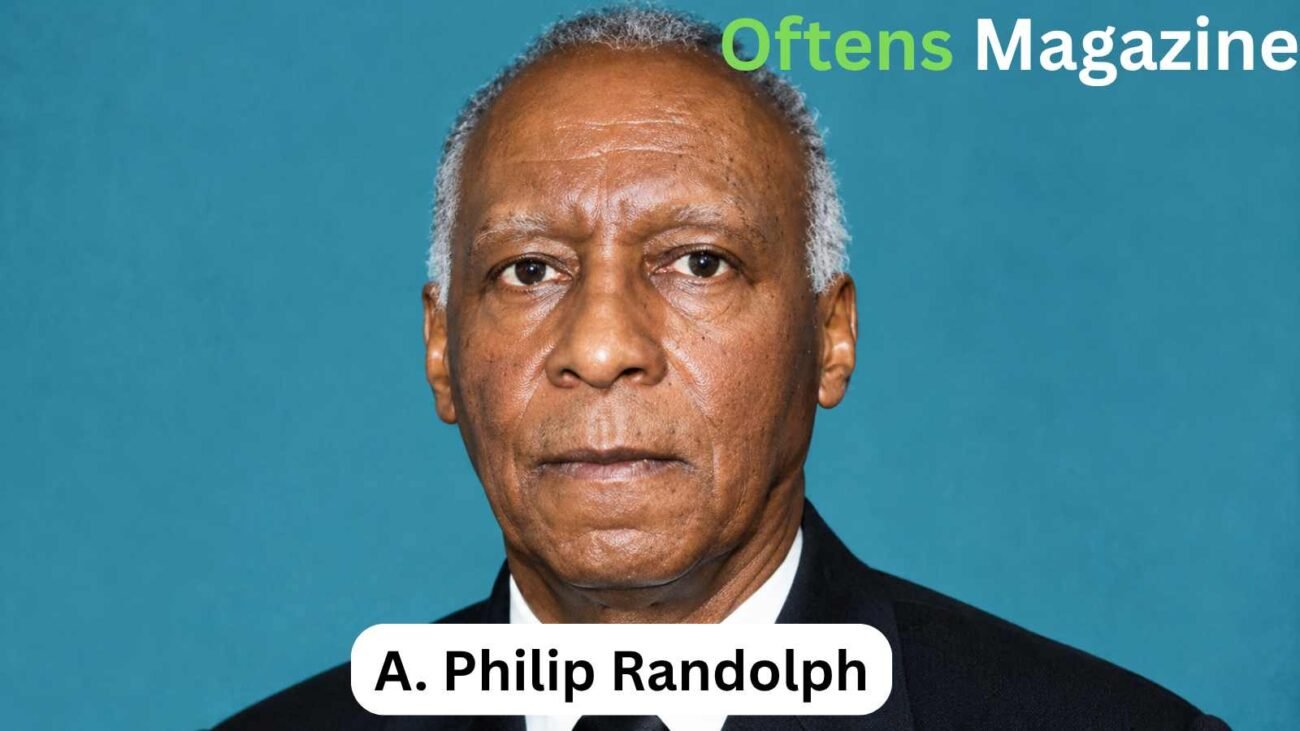
A. Philip Randolph was an important American labor leader and civil rights activist who spent much of his life fighting for better working conditions and equal rights for Black Americans. Born in 1889 in Florida, he became one of the leading voices in the labor movement during the 20th century. His work focused on helping Black workers gain fair wages, better treatment, and greater opportunities in the workplace.
Randolph is especially remembered for helping build the Brotherhood of Sleeping Car Porters, one of the first major labor unions led by African Americans. He also played an important role in the movement that pushed the U.S. government to end discrimination in defense jobs and helped organize the 1963 March on Washington. His long career connected the labor movement with the wider fight for civil rights, leaving a lasting mark on American history.
A. Philip Randolph Quick Bio
| Detail | Information |
| Full Name | Asa Philip Randolph |
| Born | April 15, 1889 |
| Birthplace | Crescent City, Florida, U.S. |
| Known For | Labor leadership and civil rights activism |
| Major Organization | Brotherhood of Sleeping Car Porters |
| Publication | The Messenger |
| Spouse | Lucille Green Randolph |
| Died | May 16, 1979 |
| Age at Death | 90 years |
Who Was A. Philip Randolph?
A. Philip Randolph was an American labor leader, journalist, and civil rights activist who spent his life fighting for better opportunities and fair treatment for Black workers. Born on April 15, 1889, in Crescent City, Florida, he later moved to New York City and became active in labor organizing. His work brought together the fight for workers’ rights and the larger struggle for racial equality.
Randolph became especially known for founding the Brotherhood of Sleeping Car Porters in 1925. The union represented Black workers employed as porters by the Pullman Company, who faced low pay, long hours, and unfair treatment. After years of organizing, the union won a collective bargaining agreement with the Pullman Company in 1937. This achievement helped make Randolph a major figure in both the American labor movement and the civil rights movement.
A. Philip Randolph was a leading labor and civil rights figure who fought for equal rights through organized action.
A. Philip Randolph’s Early Life and Family
A. Philip Randolph was born on April 15, 1889, in Crescent City, Florida. His father, James William Randolph, was a minister in the African Methodist Episcopal Church, while his mother, Elizabeth Robinson Randolph, worked as a seamstress. Randolph grew up in a family that valued education, discipline, and faith. His father’s work as a minister also exposed him to ideas about equality and social responsibility from an early age.
As a young man, Randolph became interested in literature, public speaking, and the problems faced by Black Americans. He later moved to New York City, where he found new opportunities to develop his ideas and become involved in political and labor activities. His early experiences helped shape the strong sense of fairness that later became central to his work as a labor leader and civil rights activist.
Randolph’s early family life helped shape the values that guided his later work for equality and workers’ rights.
A. Philip Randolph’s Education and Early Career
Randolph received his early education in Jacksonville, Florida, where he attended the Cookman Institute. He was a strong student and developed an early interest in literature, public speaking, and history. After finishing school, he moved to New York City in 1911. There, he continued developing his knowledge through reading and involvement in the city’s growing Black intellectual and political community.
In New York, Randolph worked a variety of jobs while becoming increasingly interested in labor rights and racial equality. He met Chandler Owen, another activist who shared his interest in organizing workers. Together, they became involved in socialist politics and began working to create a stronger voice for Black workers. These early activities prepared Randolph for the labor and publishing work that would become an important part of his career.
Randolph’s education and early experiences in New York helped prepare him for a lifetime of labor and civil rights activism.
A. Philip Randolph and The Messenger
In 1917, A. Philip Randolph and Chandler Owen founded The Messenger, a political and literary magazine in New York City. The publication gave Black writers and activists a place to discuss racial equality, workers’ rights, politics, and social issues. Randolph served as an editor and used the magazine to express his views about economic and racial injustice.
The Messenger also reflected Randolph’s belief that Black workers needed a stronger voice in American society. Through the magazine, he criticized discrimination and encouraged Black Americans to become more active in the labor movement. The publication became an important part of Randolph’s early career and helped establish him as a serious writer, organizer, and political thinker.
The Messenger gave Randolph an important platform to speak about racial equality and workers’ rights.
A. Philip Randolph and the Brotherhood of Sleeping Car Porters
A. Philip Randolph became best known for his leadership of the Brotherhood of Sleeping Car Porters, a union he helped organize in 1925. The union represented Black men who worked as porters on trains operated by the Pullman Company. These workers often faced low wages, long working hours, and difficult working conditions. Randolph believed they could improve their situation by organizing together.
The union faced strong opposition during its early years, but Randolph continued the campaign for recognition. In 1937, the Pullman Company finally signed a collective bargaining agreement with the Brotherhood. The agreement was a major achievement for the porters and gave the union a stronger position in negotiations over wages and working conditions. Randolph’s success also made him an important figure in the wider American labor movement and the fight for civil rights.
Randolph helped turn the Brotherhood of Sleeping Car Porters into a powerful voice for Black workers.
A. Philip Randolph’s Role in the Labor Movement
A. Philip Randolph played a major role in the American labor movement by fighting for fair treatment, better wages, and stronger rights for Black workers. He believed that workers could improve their lives when they organized together and had a strong voice in negotiations with employers. His most important labor work centered on the Brotherhood of Sleeping Car Porters, which he helped organize in 1925 for Black men working as porters for the Pullman Company. The porters faced difficult working conditions, low pay, and discrimination, and Randolph spent years building support for their union.
Randolph’s efforts eventually led to an important victory in 1937, when the Pullman Company signed a collective bargaining agreement with the Brotherhood of Sleeping Car Porters. The agreement gave the union a recognized role in negotiating for its members and strengthened the position of Black workers within the labor movement. Randolph also showed that the fight for workers’ rights could be closely connected to the struggle for racial equality. His work helped make labor organizing an important part of the broader movement for equal rights in the United States.
Randolph helped strengthen the labor movement by giving Black workers a united voice for fair treatment and better working conditions.
A. Philip Randolph and the Fight for Civil Rights
A. Philip Randolph connected the fight for workers’ rights with the larger struggle for racial equality in the United States. He challenged discrimination against Black workers and argued that equal rights should include fair treatment in the workplace. During World War II, he put pressure on the federal government to address racial discrimination in the defense industry. In 1941, he planned a March on Washington to protest discrimination in defense jobs, and President Franklin D. Roosevelt responded by issuing Executive Order 8802, which banned racial discrimination in defense industries working under federal contracts and created the Fair Employment Practice Committee.
Randolph continued to push for equal opportunities in the years that followed. He also worked to end segregation in the armed forces, helping build pressure that contributed to President Harry Truman’s 1948 order to desegregate the U.S. military. Through these efforts, Randolph became an important link between the labor movement and the modern civil rights movement. His work showed how organized workers could use peaceful pressure to challenge discrimination and encourage changes in federal policy.
Randolph used organized action to challenge racial discrimination in both the workplace and American institutions.

A. Philip Randolph and the March on Washington
A. Philip Randolph played an important role in the planning of the 1963 March on Washington for Jobs and Freedom. The idea of a large march in Washington had been part of Randolph’s activism for years, and he worked with other civil rights leaders to bring the 1963 event together. The march brought together hundreds of thousands of people who called for civil rights, voting rights, jobs, and economic equality. Randolph served as the chairman of the march and spoke at the event alongside other leading figures of the movement.
Randolph’s focus on jobs was an important part of the march. He believed that civil rights should include economic opportunity and fair employment, not only changes in laws about segregation and voting. The March on Washington became one of the most significant events of the civil rights era, and Randolph’s role reflected his long effort to connect racial equality with workers’ rights and economic justice.
Randolph helped make jobs and economic equality an important part of the 1963 March on Washington.
A. Philip Randolph’s Marriage and Personal Life

A. Philip Randolph married Lucille Green in 1913. Lucille was a teacher and later became involved in supporting her husband’s work and political activities. The couple lived in New York City, where Randolph built his career as a labor organizer, writer, and civil rights activist. Their marriage lasted until Lucille’s death in 1963.
Randolph generally kept his personal life separate from the public attention surrounding his activism. Much of his adult life was devoted to organizing workers, speaking about racial equality, and working with other leaders on civil rights issues. His home life therefore remained less visible than his long career in labor and civil rights.
Randolph shared his personal life with Lucille Green while devoting much of his adult life to social and labor activism.
Did A. Philip Randolph Have Children?
A. Philip Randolph and his wife, Lucille Green Randolph, did not have children. Their marriage lasted for about five decades, from 1913 until Lucille’s death in 1963. Randolph’s life was largely centered on his work as a labor organizer and civil rights leader, and he devoted much of his time to campaigns for workers’ rights and racial equality.
Because Randolph did not have children, his family story is more closely connected with his marriage and his wider circle of colleagues and activists. His lasting influence came through the organizations he helped build and the movements he supported rather than through a direct family legacy.
A. Philip Randolph and Lucille Green Randolph did not have children.
A. Philip Randolph’s Later Life
In the later years of his life, A. Philip Randolph remained connected to the labor and civil rights movements, although he gradually stepped away from public activity. He continued to be respected for his work with the Brotherhood of Sleeping Car Porters and his role in major civil rights campaigns. In 1964, he received the Presidential Medal of Freedom for his contributions to the country. He also helped establish the A. Philip Randolph Institute, which focused on issues affecting working people.
Randolph continued his work for several more years before retiring from public life. In 1968, he resigned as president of the Brotherhood of Sleeping Car Porters because of health problems. He then spent his remaining years away from the intense public activity that had defined much of his career. Randolph died in New York City on May 16, 1979, at the age of 90.
Randolph’s later years reflected the lasting impact of a career devoted to workers’ rights and racial equality.
How Did A. Philip Randolph Die?
A. Philip Randolph died on May 16, 1979, at his home in New York City. He was 90 years old. In the years before his death, Randolph had stepped away from much of his public work. He had resigned as president of the Brotherhood of Sleeping Car Porters in 1968 and retired from public life. His final years came after a long career focused on labor rights, racial equality, and peaceful protest.
Randolph’s death marked the end of a career that had lasted for more than six decades. From organizing Black railroad workers to helping shape the 1963 March on Washington, he remained closely connected to major changes in American labor and civil rights history. His work continued to influence organizations and activists after his death.
A. Philip Randolph died in New York City in 1979 at the age of 90.
A. Philip Randolph’s Legacy and Achievements
A. Philip Randolph left a lasting mark on both the labor movement and the civil rights movement. His leadership of the Brotherhood of Sleeping Car Porters helped Black railroad workers gain a stronger voice in negotiations with the Pullman Company. The union won a collective bargaining agreement in 1937, giving its members greater protection and improving their working conditions. Randolph also helped connect the fight for fair employment with the broader struggle for racial equality.
Randolph’s influence extended beyond the union movement. He played a major role in the planning of the 1963 March on Washington for Jobs and Freedom and worked for equal opportunities for Black Americans. In 1964, he received the Presidential Medal of Freedom. He later helped establish the A. Philip Randolph Institute, continuing his interest in workers’ rights and economic equality.
Randolph’s legacy comes from his long fight for workers’ rights, equal employment, and racial equality.
Frequently Asked Questions
1. What was A. Philip Randolph known for?
A. Philip Randolph was known for his leadership in the labor movement and his work for civil rights. He organized the Brotherhood of Sleeping Car Porters and helped lead the 1963 March on Washington.
2. When was A. Philip Randolph born?
A. Philip Randolph was born on April 15, 1889, in Crescent City, Florida.
3. What did A. Philip Randolph do for the Brotherhood of Sleeping Car Porters?
He organized and led the union, which represented Black sleeping car porters working for the Pullman Company. The union won a collective bargaining agreement with the company in 1937.
4. Was A. Philip Randolph involved in the March on Washington?
Yes. Randolph played a leading role in organizing the 1963 March on Washington for Jobs and Freedom.
5. Did A. Philip Randolph have children?
No. A. Philip Randolph and his wife, Lucille, did not have children.
6. Who was A. Philip Randolph’s wife?
His wife was Lucille Green Randolph, whom he married in 1914 according to the Library of Congress finding aid. She died in 1963.
7. When did A. Philip Randolph die?
He died on May 16, 1979, in New York City, at the age of 90.
8. Did A. Philip Randolph receive any major honors?
Yes. He received the Presidential Medal of Freedom in 1964 for his contributions to American society.
Conclusion
A. Philip Randolph was a major labor leader and civil rights activist whose work brought workers’ rights and racial equality together. From organizing the Brotherhood of Sleeping Car Porters to helping shape the March on Washington, he spent decades using peaceful organization to challenge unfair treatment and discrimination. His efforts gave Black workers a stronger voice and helped connect economic rights with the wider civil rights movement.
Randolph’s story remains an important part of American history because his work reached far beyond one union or one campaign. He believed that meaningful equality included fair treatment at work, better opportunities, and freedom from racial discrimination. His long career and the organizations he helped build continued to influence the labor and civil rights movements after his death.

One thought on “Who Is A. Philip Randolph? His Life, Career and Legacy ”