Key Takeaways
- A documented maintenance plan makes it easier to identify minor issues before they become major failures.
- Service records should include mileage, engine hours, fault codes, driver observations, repairs, and downtime.
- Oil and coolant testing can provide useful evidence when paired with a physical inspection.
- Modern diesel maintenance requires both hands-on mechanical knowledge and electronic diagnostics.
- Repair and replacement decisions should account for downtime, parts availability, vehicle condition, and future operating needs.
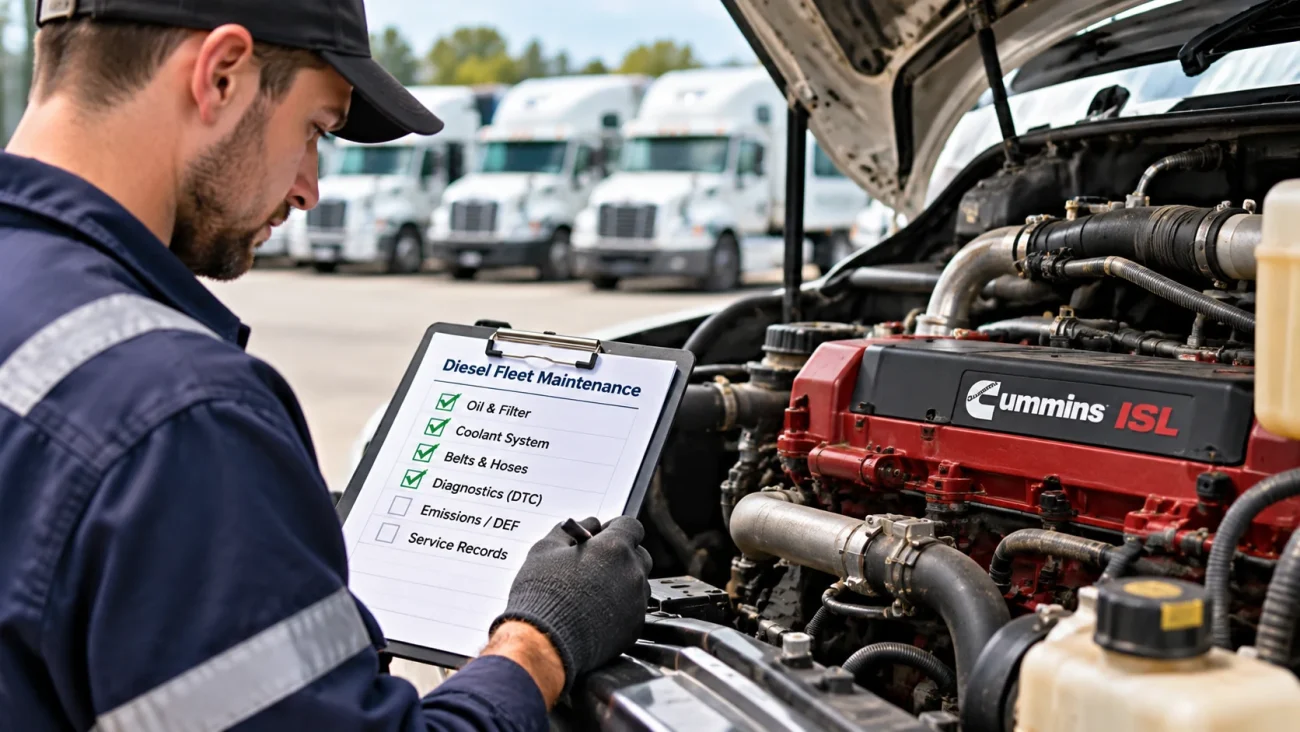
Unexpected downtime can disrupt routes, delay customers, and increase repair costs. A written maintenance plan helps fleet operators catch developing problems earlier, whether they manage a few work trucks or a larger mixed fleet that includes equipment powered by a Cummins ISL engine. The most effective plans connect routine inspections, driver reports, fluid testing, diagnostic information, and repair records.
There is no universal schedule that fits every diesel vehicle. A truck that pulls heavy loads, spends long periods idling, or operates on rough job sites may need different attention than a vehicle making predictable local deliveries. Start with manufacturer service requirements, then adjust the plan to match actual operating conditions.
Why Diesel Fleet Maintenance Needs a Clear Plan
Reactive maintenance often costs more because a vehicle is taken out of service after a problem has already progressed. A clear plan provides drivers with a simple reporting process and technicians with consistent checkpoints for inspecting components prone to wear.
Mileage matters, but it is only one measurement. Engine hours, idle time, payload, route terrain, ambient temperature, and stop-and-go operation can all influence service needs. Tracking those conditions helps a fleet avoid treating a heavily worked truck the same way as a lightly used one.
Build a Baseline for Every Vehicle
Before changing service intervals, document the current condition of each vehicle. A baseline makes later changes easier to identify and gives technicians useful history when a warning light or performance complaint appears.
- Record the vehicle identification number, engine model, mileage, and engine hours.
- Document available readings for oil pressure, coolant temperature, fuel use, and idle time.
- Review prior repairs, recurring fault codes, and warranty history.
- Note leaks, smoke, hard starting, vibration, unusual noise, or reduced power.
- Identify the vehicle’s usual route, load range, and operating environment.
Use a Layered Inspection Schedule
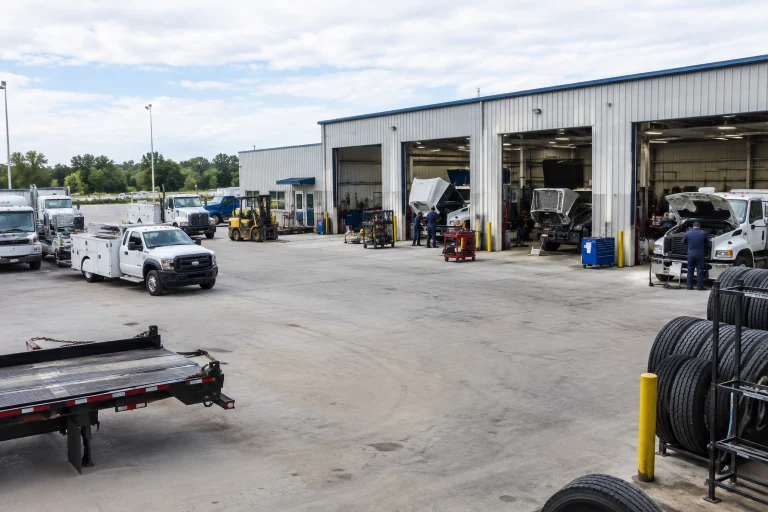
Layered inspections keep daily checks manageable while reserving deeper work for scheduled service visits. Checklists should be specific enough to promote consistency, but flexible enough to address the vehicle’s duty cycle.
Daily Checks
- Check engine oil, coolant, fuel, and diesel exhaust fluid levels as applicable.
- Look for leaks in oil, fuel, coolant, exhaust, and air.
- Inspect visible belts, hoses, wiring, clamps, and connections.
- Report warning lights, unusual engine sounds, smoke, or changes in drivability.
Weekly and Scheduled Service Checks
- Inspect intake plumbing, air filters, batteries, terminals, and tire condition.
- Compare fuel consumption and idle time with the vehicle’s typical operating range.
- Replace fluids and filters at the correct interval for the engine and duty cycle.
- Test the cooling system and inspect the radiator, charge-air cooler, turbocharger, and exhaust connections.
- Scan for active and stored diagnostic faults, then compare them with inspection findings.
Make Oil and Coolant Testing Part of the Process
Fluid samples can reveal issues not visible during a walk-around. Used-oil analysis may show fuel dilution, coolant contamination, abnormal wear, or lubricant deterioration. Consistent sampling and trend review make results most useful. Use the same method when possible, record mileage and hours, and investigate sudden changes before demanding work resumes. Testing supports—but does not replace—inspection and diagnosis.
Watch for Early Warning Signs
Drivers are often the first people to notice a change. Encourage prompt reporting of prolonged cranking, rough idle, unusual exhaust color, rising oil consumption, unexplained coolant loss, new vibration, reduced pulling power, declining fuel economy, repeated alerts, or unusual pressure and temperature readings.
Combine Technician Skills With Digital Tools
Diagnostic software can identify fault codes and system readings, but a code does not always identify the root cause. Technicians should compare scan results with driver comments, service history, fluid results, and a physical inspection before approving extensive work.
Emissions-related concerns deserve early attention. Many on-road diesel vehicles use diesel exhaust fluid in selective catalytic reduction systems, so fleets should keep approved fluid on hand, inspect wiring and connectors, check for exhaust leaks, and record regeneration events and related faults.
Track Data That Supports Better Decisions
A maintenance record should help managers spot patterns, not simply confirm that a work order was closed. Track unscheduled repairs, labor and parts costs, downtime hours, repeat repairs, preventive-maintenance completion, fuel use, and cost per operating mile or hour.
Review this information monthly. Group repeat issues by vehicle, engine family, route, driver, or operating location. That process can reveal whether a concern is isolated or points to a broader training, parts, or operational problem.
Control Idle Time and Operating Stress
Unnecessary idling uses fuel and contributes to engine wear. The U.S. Department of Energy notes that idle reduction can reduce fuel use and maintenance-related wear, making idle-time reporting a practical part of fleet planning.
- Measure idle time and identify avoidable patterns.
- Review cold-start and warm-up practices with drivers.
- Match the vehicle and engine to the work whenever possible.
- Avoid repeated overloading and address loading practices that create excess stress.
- Use telematics data alongside inspection records, not as a replacement for them.
Know When Repair Makes More Sense Than Replacement
The lowest repair estimate is not always the lowest total cost. Before approving a major repair, determine the cause of the failure, whether connected systems remain sound, how long parts will take to arrive, and how much revenue or service capacity will be lost during downtime.
Also consider whether the vehicle still fits current fleet needs, whether the repair includes testing or warranty documentation, and whether repeated repairs are becoming more costly than a planned replacement. A clear decision record helps management make consistent choices across the fleet.
Prepare for Changing Fleet Technology
Many shops now support more than one powertrain type. Diesel vehicles may operate alongside electric, natural gas, or hybrid equipment, which can require different tools, training, safety procedures, and service workflows. Keeping maintenance records organized by vehicle type helps technicians access the right information quickly.
Common Questions About Diesel Fleet Maintenance
How often should a diesel engine be inspected?
Perform daily checks for fluid levels, leaks, warning lights, and visible damage. Schedule deeper inspections according to the engine maker’s guidance and the vehicle’s actual duty cycle.
Is mileage the best way to schedule service?
Not always. Engine hours, idle time, load, route conditions, and climate can provide a more complete picture of service.
Can oil testing prevent engine failure?
It cannot prevent every failure, but it can provide early evidence that warrants further inspection before damage becomes more severe.
Conclusion
A reliable diesel fleet maintenance plan is built on clear inspection steps, accurate records, trained technicians, and fast action when warning signs appear. By combining routine service, fluid testing, diagnostic data, driver feedback, and cost tracking, fleet managers can reduce avoidable downtime and make more confident repair decisions.
