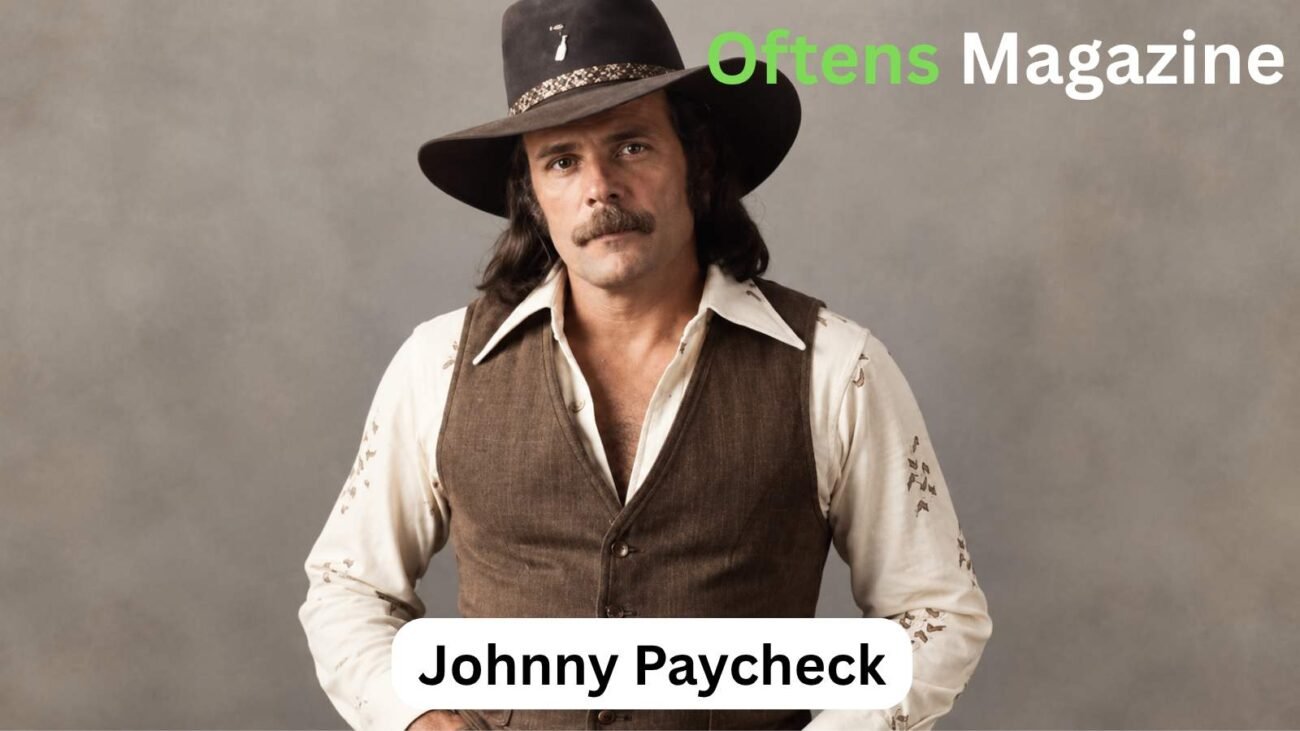
When people search for Johnny Paycheck’s net worth, they usually expect a simple number tied to a country star who sold millions of records and released more than seventy albums. The truth is messier. Born Donald Lytle in Greenfield, Ohio, Paycheck built a career on eleven Top 10 country hits, and his 1977 anthem Take This Job and Shove It became his only No. 1 single and a permanent piece of American working-class culture. Yet behind the chart success stood years of tax liens, legal battles, and a 1990 bankruptcy filing that listed debts of more than $1.6 million, most of it owed to the IRS. He died in 2003 at age 64, and what he left behind was not a fortune but a complicated financial trail shaped by hard living, prison time, and a catalog that outlived the man himself.
Johnny Paycheck Quick Bio
| Item | Details |
| Birth Name | Donald Eugene Lytle |
| Stage Name | Johnny Paycheck |
| Born | May 31, 1938, Greenfield, Ohio |
| Died | February 19, 2003, Nashville (age 64) |
| Cause of Death | Emphysema and diabetes |
| Genres | Country, outlaw country |
| Instruments | Vocals, guitar, bass |
| Years Active | 1960s–2003 |
| Biggest Hit | Take This Job and Shove It (1977, only No. 1) |
| Top 10 Hits | 11 (1966–1979) |
| Grand Ole Opry | Inducted 1997 |
| Spouses | Dinorah (1956–1965); Sharon Rae (1969–2003) |
| Children | One son, two daughters |
| Prison Time | 22 months for 1985 bar shooting |
| Financial Trouble | 1990 bankruptcy, $1.6M debts |
Johnny Paycheck’s Early Life and Background
Johnny Paycheck was born Donald Eugene Lytle on May 31, 1938, in Greenfield, Ohio, and he started playing guitar by the time he was six years old . He left home as a teenager and eventually joined the Navy, but his time there ended badly after he was court-martialed and spent two years in a military prison for assaulting an officer . After his discharge, he drifted into music, working as a bass player and harmony singer for bigger country stars like George Jones, Ray Price, and Porter Wagoner . He also showed a real gift for songwriting, penning Tammy Wynette’s first hit, “Apartment No. 9,” in 1966.
His own recording career took off slowly. He recorded under the name Donny Young in the late 1950s and early 1960s with little success, but after changing his stage name to Johnny Paycheck in the mid-1960s, he finally cracked the country charts with “A-11” in 1965 . His breakthrough came in 1971 with “She’s All I Got,” which hit No. 2, and he followed it with a string of hits throughout the decade . The song that defined him, though, was “Take This Job and Shove It” in 1977 a working-class anthem that became his only No. 1 country hit, sold over two million copies, and even inspired a movie . He was inducted into the Grand Ole Opry in 1997, a rare honor that came near the end of his performing years.
Johnny Paycheck’s early life was marked by restlessness and trouble, but his musical talent both as a songwriter and a performer eventually carried him to the top of the country charts.
Johnny Paycheck’s Rise to Fame in Country Music
Johnny Paycheck’s climb to country stardom was not a straight line. He spent years as a sideman, playing bass and singing harmony for bigger names like George Jones, Porter Wagoner, and Ray Price, while quietly building a reputation as a sharp songwriter. He penned Tammy Wynette’s first hit, Apartment No. 9, in 1966. His own recording career sputtered at first, recording as Donny Young with little traction, until he adopted the Johnny Paycheck name and cracked the charts with A-11 in 1965.
The real breakthrough came in 1971 with She’s All I Got, which hit No. 2 on the country singles chart and pushed him into the mainstream. Through the mid-1970s, he leaned into the outlaw image that was sweeping country music alongside figures like Willie Nelson and Waylon Jennings, and that persona paid off. In January 1978, Take This Job and Shove It spent two weeks at No. 1, his only chart-topping hit, and turned him into a working-class hero almost overnight. He joined the Grand Ole Opry in 1997, a late-career honor that cemented his place in country music history.
His fame was built on years of grinding work behind the scenes, a strategic image shift, and one perfect anthem that captured the frustration of ordinary workers.
Johnny Paycheck’s Most Famous Songs and Career Success
Take This Job and Shove It is the song everyone remembers, and for good reason. It sold over two million copies, inspired a feature film, and became a permanent piece of American working-class culture. But Paycheck’s catalog runs deeper than that one anthem. She’s All I Got reached No. 2 in 1971, Mr. Lovemaker hit No. 2 in 1973, and songs like Slide Off Your Satin Sheets and I’m the Only Hell (Mama Ever Raised) kept him on the charts through the late 1970s. All told, he landed eleven Top 10 country singles across his career.
His success wasn’t limited to performing. As a songwriter, Apartment No. 9 gave Tammy Wynette her first chart hit, and he co-wrote George Jones’s Once You’ve Had the Best. He also co-owned Little Darlin’ Records with producer Aubrey Mayhew in the 1960s, though that venture eventually folded. By the time he was inducted into the Grand Ole Opry in 1997, he had recorded dozens of albums and left a mark that went far beyond his one No. 1 hit.
His career success rested on a string of consistent country hits, respected songwriting credits, and one era-defining anthem that outlived everything else.
How Did Johnny Paycheck Make His Money?
Johnny Paycheck’s income came from several directions over the years. The biggest source was record sales and chart hits, especially during his peak run from the early 1970s through the late 1970s, when he was releasing albums for major labels like Epic and Mercury. Take This Job and Shove It alone sold over two million copies, and the accompanying album of the same name moved another two million units. Touring was another steady stream. He performed constantly through the 1970s and into the 1980s, playing bars, fairs, and country venues across the country.
Songwriting royalties also contributed, particularly from Apartment No. 9 and other songs he wrote for artists like Tammy Wynette and George Jones. He also had a stake in Little Darlin’ Records early in his career, though that label folded by the end of the 1960s. In his later years, he continued touring and recording sporadically, but his earning power was never the same after his legal and financial troubles took hold in the 1980s.
His money came from hit records, constant touring, and songwriting royalties, but the peaks were brief and the valleys were deep.
Johnny Paycheck’s Record Sales, Royalties and Touring Income
The numbers around Paycheck’s record sales are impressive on paper. Take This Job and Shove It sold over two million copies as a single, and the album it appeared on also sold two million copies. He recorded more than seventy albums over his career, though most of them did not approach that level of commercial success. His eleven Top 10 country singles spanned from 1966 to 1979, with She’s All I Got and Mr. Lovemaker both reaching No. 2. Those chart positions translated into royalties, but the music business of that era was not always kind to artists when it came to accounting.
Touring was likely his most consistent source of cash flow. He played relentlessly through the 1970s, and even after his prison stint in the early 1990s, he returned to the road with dates in Branson, Missouri, and other venues. But his tax problems and bankruptcy filings suggest that the money flowing in was often matched or exceeded by what was flowing out, or being taken by the IRS. By 1990, he listed debts of more than $1.6 million, most of it owed to the government.
His biggest hits sold millions, but the gap between what he earned and what he kept was enormous.
Johnny Paycheck’s Net Worth at the Time of His Death
There is no official figure for Johnny Paycheck’s net worth when he died in 2003. What exists instead is a financial trail that points in the opposite direction of wealth. In 1990, he filed for bankruptcy listing debts of over $1.6 million, with the bulk owed to the IRS. That filing came after years of tax liens and lawsuits, including a $300,000 lien and a 1982 IRS suit for $103,000 in back taxes. By the time of his death, he had been in declining health for years and had largely stopped touring and recording.
Any estimate of his net worth at death would have to account for the fact that his earning years were cut short by prison time, illness, and legal battles. He was not a wealthy man when he passed. The more honest way to frame it is that his estate likely held little beyond whatever residual royalties his catalog generated, and even those were not enough to suggest significant accumulated wealth.
Johnny Paycheck did not die rich. His final years were shaped far more by debt, illness, and the aftermath of financial collapse than by the fortune his hits might suggest.
Johnny Paycheck’s Financial Problems and Bankruptcy
Paycheck’s money troubles were not a sudden collapse. They built up over years. The IRS came after him in 1982 for $103,000 in back taxes, and the pressure never really let up. By 1990, he filed for bankruptcy with debts exceeding $1.6 million, most of it owed to the federal government. He also faced a $300,000 tax lien, and his legal battles, including the 1985 bar shooting that sent him to prison, added court costs and lost income on top of the tax burden.
His lifestyle played a role too. He battled drug and alcohol problems for much of his career, and the chaos that came with that kind of life rarely pairs well with financial stability. The combination of IRS seizures, legal fees, prison time, and declining earning power created a hole he never climbed out of. Even after his release from prison in the early 1990s, he returned to performing but never regained the financial footing he had in the 1970s.
His financial ruin was a slow-motion collision of tax debt, legal troubles, and a hard-living lifestyle that drained whatever his hits brought in.
READ ALSO:- What Is Lisa Velez’s Net Worth? Inside Her Music Career and Income
Johnny Paycheck’s Wife and Married Life

Johnny Paycheck was married twice. His first marriage was to Dinorah, from 1956 to 1965, and the couple had one child together. That marriage ended before his career really took off. In 1969, he married Sharon Rae, and they stayed together for more than thirty years, through his chart success, his prison sentence, his bankruptcy, and his final illness. Sharon was with him until his death in 2003, and according to their son John, they were never separated or divorced.
Sharon passed away in January 2024 at the age of 79, more than two decades after her husband. Their marriage stands out as one of the few stable threads in a life that was otherwise marked by turbulence and upheaval.
Sharon was the constant in Johnny Paycheck’s chaotic life, staying by his side through fame, prison and financial ruin until the very end.
Johnny Paycheck’s Children and Family

Johnny Paycheck had children from both of his marriages. His first marriage to Dinorah produced one child, and his marriage to Sharon produced one son, Jonathan, who performs as John PayCheck. John has spoken publicly about his father, sharing details about the man behind the outlaw image, his love for Andy Griffith reruns on the tour bus, his passion for golf and fishing, and his deep roots in country music. John has also followed his father into music, carving out his own path as a country singer-songwriter while honoring the family legacy.
The family side of Paycheck’s life was quieter than his public persona. Those close to him described him as generous and down-to-earth offstage a man who returned to his hometown of Greenfield, Ohio, to perform benefit shows for children’s charities even as some residents criticized his legal troubles. His family life, though complicated by his absences and struggles, remained a grounding force he never fully let go of.
Behind the outlaw image was a family man whose son and widow carried his memory long after the music stopped.
What Happened to Johnny Paycheck’s Money After His Death?
There was no grand fortune to distribute when Johnny Paycheck died. The bankruptcy filing of 1990 and the years of IRS debt meant that whatever assets existed were largely spoken for or depleted. His catalog, the songs he recorded and the royalties they generate, remained a potential source of income, but the value of those royalties was never publicly detailed. His widow, Sharon, managed affairs until her death in 2024, and their son John has since become the primary keeper of his father’s legacy, both through music and through maintaining the official website and answering fan questions.
Any money that continues to come in from streaming, licensing, or physical sales of his music would flow to his estate and heirs, but the scale of that income is modest compared to what a major active artist would generate. The more meaningful inheritance was never financial. It was the catalog itself, and the working-class anthem that keeps his name alive decades after the checks stopped clearing.
There was no Paycheck fortune to inherit. What remained was a musical legacy and the complicated paperwork of a life lived hard.
Frequently Asked Questions
1. Was Johnny Paycheck rich when he died?
No. He filed for bankruptcy in 1990 with debts over $1.6 million, mostly owed to the IRS, and never rebuilt significant wealth.
2. How many Top 10 country hits did he have?
Eleven, spanning from 1966 to 1979.
3. What was his biggest song?
Take This Job and Shove It from 1977, his only No. 1 country hit, which sold over two million copies and inspired a film.
4. How long was he married to his wife Sharon?
More than thirty years, from 1969 until his death in 2003.
5. Did any of his children become musicians?
Yes, his son Jonathan performs as John PayCheck and has pursued a country music career.
6. Why did he go to prison?
He served time for shooting a man in an Ohio bar in 1985. He claimed self-defense but was convicted of aggravated assault.
Conclusion
Johnny Paycheck’s story is not a rags-to-riches tale. It is a story about a man who earned real money, made real hits, and then watched most of it slip away through taxes, legal battles, and the kind of life that does not leave much room for savings. He gave country music one of its most enduring anthems and a catalog of solid hits that still get played. But when people search for his net worth, the honest answer is not a number. It is a cautionary tale about what happens when talent and success collide with chaos and debt.
