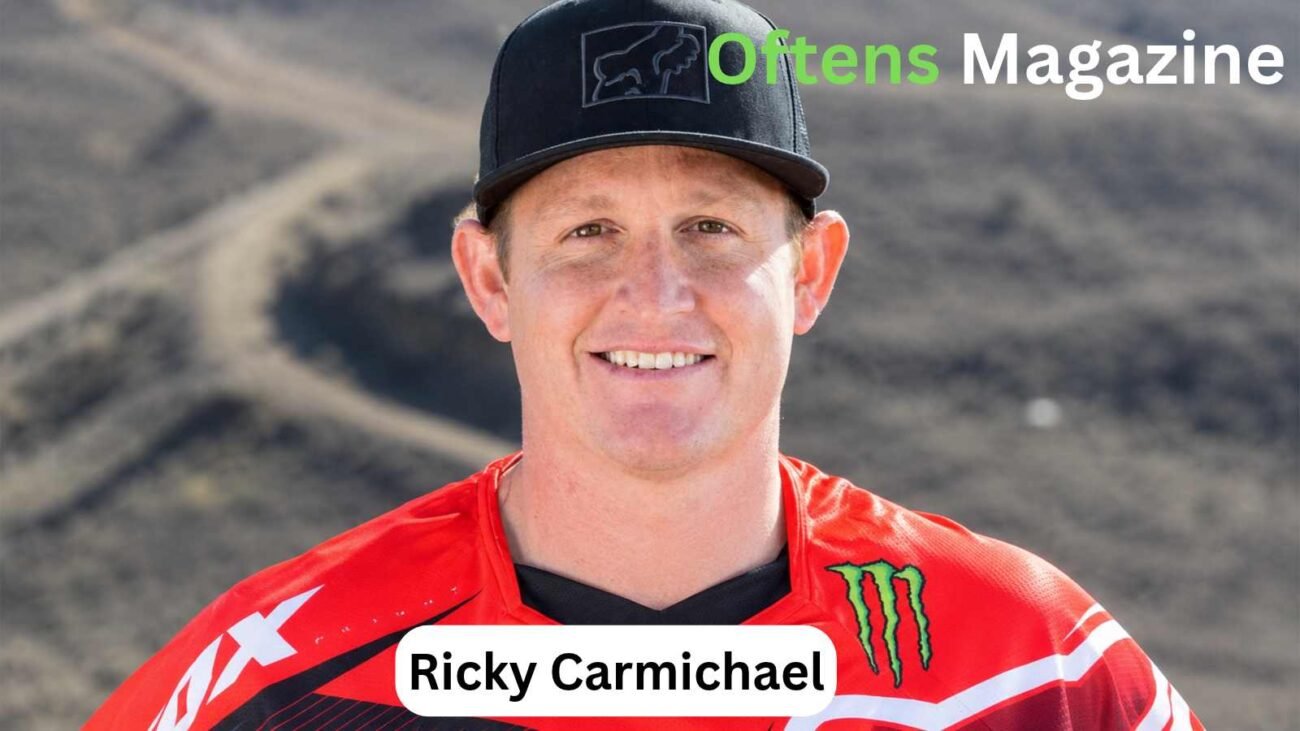
Ricky Carmichael’s net worth in 2026 is most commonly estimated at 25million**thoughatleastonesourceplacesithigherat**28 million. The gap between those figures isn’t explained anywhere, and neither number comes with a clear breakdown of how it was calculated. What makes the $25 million figure more believable is that Carmichael himself once said racing one more year would have added “10-15 million” to his total, and he described that kind of money as not life-changing a comment that suggests his career earnings were already substantial . During his prime, he was reportedly the highest-paid rider in motocross, with estimated annual income between $8 million and $10 million from salary and sponsorships.
That income came from a mix of race contracts, win bonuses, and personal endorsement deals with brands like Monster Energy, Suzuki, and Fox Racing . After retiring from full-time motocross in 2007, he moved into NASCAR, racing in the Truck Series and Nationwide Series between 2008 and 2011 . Truck Series earnings at the time topped out around $700,000, and Nationwide drivers could earn roughly double that, so NASCAR was never going to match his motocross money . The bigger financial shift came later, when he applied what he learned about sponsorship and team economics to ventures like RCH Racing, a motocross team he partnered on with Carey Hart . He also stayed connected to the sport through track design, broadcasting work, and a partnership with Triumph Motorcycles on their off-road line . Those ventures, combined with his racing-era earnings, are what the current net worth estimates are built on.
Ricky Carmichael’s net worth sits in the $25–28 million range, built primarily on his dominance in motocross and extended through NASCAR experience and post-racing business work.
Ricky Carmichael Quick Bio
| Item | Details |
| Full Name | Richard Joseph Carmichael |
| Nickname | “The GOAT” (Greatest of All Time), also “RC” |
| Born | November 27, 1979, Clearwater, Florida, USA |
| Height | 1.68 m (approx. 5’6″) |
| Primary Sport | Motocross / Supercross |
| Pro Debut | 1997 |
| Retired from Motocross | 2007 |
| AMA Championships | 15 total (10 Motocross, 5 Supercross) |
| Career AMA Wins | 150 (all-time record) |
| Perfect Seasons | 2002 and 2004 (won every moto) |
| Post-Racing Career | NASCAR (2008–2011), broadcasting, Triumph Motorcycles partnership, track design |
| Estimated Net Worth | $25 million – $28 million (estimates vary) |
How Did Ricky Carmichael Make His Money?
Ricky Carmichael’s money came from a few main places: race contracts, win bonuses, and personal sponsorship deals. During his prime, he was the highest-paid rider in motocross, with estimated annual income between $8 million and $10 million . A big chunk of that didn’t come from his race salary alone. Fox Racing’s Pete Fox once said the gear deal for Carmichael and James Stewart cost “a million bucks each a year” . On top of that, his helmet alone was worth serious money to sponsors one company was quoted $300,000 just to put a sticker on it for a season.
After he stepped away from full-time racing, the income sources shifted. He moved into NASCAR for a few years, then into team ownership with RCH Racing, and later into broadcasting and brand partnerships. He still holds ambassador roles with Monster Energy and Fox Racing, and he’s been working with Triumph Motorcycles on their off-road line . He also does analysis for NBC’s Supercross broadcasts, a contract that runs through 2027 . So his money isn’t just sitting in a bank from his racing days he’s kept multiple income streams active well past his last competitive season.
Carmichael’s wealth came from being the highest-paid rider of his era, then staying involved in the sport through ownership, broadcasting and long-term brand deals.
Ricky Carmichael’s Motocross Career and Prize Money
The numbers from Carmichael’s motocross career are almost hard to believe. He holds the record for the most overall motocross wins in AMA history with 150 victories . He won seven AMA Pro Motocross Championships in the 450 class and three in the 125 class . And he did something no one else has matched: two perfect seasons, winning every single moto in 2002 and 2004 . That kind of dominance didn’t just build his reputation it built his bargaining power.
Prize money in motocross was never the main source of income for top riders, though. The real money came from contracts and bonuses tied to winning. Carmichael’s value to a team like Suzuki went far beyond race results. A Dirt Rider piece noted that his compensation covered public relations, advertising, marketing, sales, and research and development for the brand . In other words, his salary reflected what he did for the company as a whole, not just what he did on the track. That’s why his estimated annual income reached $8–10 million during his peak years .
Carmichael’s motocross career was defined by unmatched records, and those records translated directly into his value as a paid athlete and brand representative.
Ricky Carmichael’s Racing Contracts and Sponsorship Deals
The contract and sponsorship side of Carmichael’s career is where the real financial story lives. His move to Suzuki was a turning point not just for him, but for the sport’s pay scale. According to people around the industry, when other riders saw what Carmichael signed for, they started demanding more from their own teams . That single deal helped push motocross salaries upward across the board. Beyond his team contract, his personal sponsorships with brands like Monster Energy, Fox Racing, Oakley, Suzuki, Makita, and DC Shoes formed a portfolio that kept money coming in from multiple directions .
The Fox Racing deal is one of the clearest examples of how much his name was worth. Pete Fox confirmed that Carmichael and James Stewart each earned around $1 million per year just from their gear contracts . That’s before team salary, before win bonuses, before any other sponsor. Add in the helmet sticker deal worth $300,000 and it becomes clear that his sponsorship income likely matched or exceeded his race earnings in some years . These deals weren’t just about putting logos on a jersey they were about associating a brand with the most dominant winner the sport had ever seen.
Carmichael’s sponsorship portfolio and contract negotiations did more than make him rich they helped raise the financial ceiling for every rider who came after him.
Ricky Carmichael’s NASCAR Career and Earnings
Carmichael’s NASCAR chapter is often framed as a disappointment because he didn’t win at the same level he did in motocross. But from a financial standpoint, it was never going to be a huge moneymaker compared to his bike career. Truck Series earnings at the time topped out around $700,000, and Nationwide Series drivers could earn roughly double that . Those numbers are solid, but they don’t come close to the $8–10 million he was making in motocross. He raced in the Truck Series from 2009 to 2011 and didn’t reach victory lane .
What NASCAR did give him was something more valuable than a paycheck. He got an inside look at how stock car teams built their businesses around sponsorships rather than relying solely on manufacturer money. That experience directly shaped what he did next. As he put it, being on both sides taught him that motocross was probably heading in the same direction, and he wanted to bring that mindset back to two wheels . So while the NASCAR earnings themselves weren’t massive, the education was worth a lot.
NASCAR didn’t make Carmichael richer in the short term, but it gave him the business knowledge he later used to build his post-racing career.
Ricky Carmichael’s Business Ventures and Other Income Sources
The biggest business move Carmichael made after racing was becoming a partner in RCH Racing, the motocross team founded by Carey Hart. He joined as a partner in October 2012, handling the competition side while Hart managed the business side . The team was built on a NASCAR-style model, funded primarily by non-racing sponsors like Sycuan Casino rather than relying on factory money from Kawasaki or Honda. Carmichael brokered a deal with Suzuki that brought technology and research support to the team, but the financial structure was different from what he grew up with . It was a deliberate bet that motocross team economics had to change.
Beyond RCH, his current income comes from a mix of broadcasting and partnerships. He works as an analyst for NBC’s Supercross and SMX coverage, a role that covers 21 races a year and runs through 2027 . He’s also partnered with Triumph Motorcycles since 2021, helping develop their off-road line the TF 450-RC debuted in 2024 . And he still has ambassador deals with Monster Energy, Fox Racing, and Quad Lock . None of these roles are as lucrative as his racing prime, but together they keep him financially active and connected to the sport.
Carmichael turned his racing knowledge into team ownership, broadcasting, and brand partnerships that continue to generate income long after his competitive career ended.

Ricky Carmichael’s Real Estate and Assets
The most visible asset in Carmichael’s portfolio is his Tallahassee, Florida home. He and his wife Ursula bought lakeside property on Lake Hall and built a Mediterranean-style house with a lower level that functions as a museum of his career championship bikes, trophies, helmets, jerseys, and framed magazine covers fill the space . The home was featured in Architectural Digest in 2010, and it was later listed for sale at $6.2 million with a five-car garage and a 70,000-gallon pool . That price tag alone tells you his real estate holdings are a significant part of his overall wealth.
Beyond the house, Carmichael’s assets include his training compound, known as the GOAT Farm. In 2021, it became the official headquarters of the Monster Energy Star Racing Yamaha team after the program moved from California . That’s not just a piece of property it’s a facility with ongoing value to the sport. Details about his other investments aren’t out there, but the combination of a multi-million-dollar home and a training facility used by a factory team suggests his asset base goes well beyond what the net worth estimates capture.
Carmichael’s real estate, especially his Tallahassee home and the GOAT Farm training facility, represents a major portion of his wealth that simple net worth numbers don’t fully show.
How Much Does Ricky Carmichael Earn Today?
Today’s income for Carmichael comes from several steady streams rather than one big contract. His NBC broadcasting role covers 21 races per year and runs through 2027 . He has ambassador deals with Monster Energy and Fox Racing, plus partnerships with Quad Lock and other brands . His Triumph Motorcycles partnership involves production, marketing, and race team involvement a role he’s said he loves and wants to grow . These aren’t the kind of deals that make headlines with dollar figures, but together they provide a consistent income without the physical toll of racing.
What’s notable is that he’s not chasing maximum earnings anymore. In a 2026 interview, he described his life as “very good” and said his balance is “pretty good,” even admitting he sometimes feels like he needs to dial it back . That’s not the language of someone grinding for every dollar. He’s in a phase where he chooses projects he actually enjoys broadcasting, developing motorcycles, representing brands he’s been with for years. The income is likely comfortable, but the motivation seems to be engagement rather than accumulation.
Carmichael’s current earnings come from broadcasting and brand partnerships, and he’s chosen a pace that prioritizes enjoyment over maximizing income.
Ricky Carmichael’s Career Achievements and Championships
The achievement list is what makes the net worth estimates believable. Carmichael won 15 AMA championships total 10 in motocross and five in Supercross . He holds the all-time record for 450 Class wins and sits second on the 250 Class list . He went undefeated in the outdoor motocross series twice, in 2002 and 2004, which no other rider has done . He was named AMA Rider of the Year five times, won three X Games gold medals, and earned the nickname GOAT Greatest of All Time from his peers . Those aren’t just trophies; they’re the credentials that justified his status as the highest-paid rider in the sport.
The championships also explain why his name still carries weight in 2026. He’s not a retired athlete who faded from view. He’s in the broadcast booth every week, he’s involved in bike development, and he’s still a face for Monster and Fox. The records are the foundation, but the continued presence is what keeps the financial opportunities coming. A rider with fewer wins but the same post-career visibility might earn similarly today but the combination of dominance and longevity is rare.
Carmichael’s 15 championships and undefeated seasons are the core reason his name still has financial value nearly two decades after his last full racing season.
Frequently Asked Questions
1. What is Ricky Carmichael’s net worth?
Estimates place it at $25 million to $28 million. The $25 million figure is more commonly cited, but the $28 million number appears in some sources . Neither comes with a full breakdown of assets and income.
2. How much did Carmichael make per year at his peak?
His estimated annual income during his motocross prime was between $8 million and $10 million, making him the highest-paid rider in the sport.
3. Did Carmichael make money from NASCAR?
He earned a salary, but Truck Series earnings topped out around $700,000 at the time, far below his motocross income . The bigger value was the business education he got from watching how NASCAR teams operated.
4. What does Carmichael do now for income?
He works as an NBC Supercross analyst, has a partnership with Triumph Motorcycles, and holds ambassador roles with Monster Energy and Fox Racing.
5. Does Carmichael still own the GOAT Farm?
His former training compound became the headquarters of the Monster Energy Star Racing Yamaha team in 2021, so it’s still connected to the sport.
Conclusion
Ricky Carmichael’s net worth in 2026 sits somewhere in the $25–28 million range, and the story behind that number is more interesting than the figure itself. He made his money by being the most dominant motocross racer of his era 150 wins, 15 championships, two perfect seasons and turning that dominance into the highest salary the sport had seen. Then he did something a lot of retired athletes don’t: he kept working. NASCAR gave him a business education. RCH Racing gave him ownership experience. Broadcasting and brand partnerships gave him a way to stay relevant without wrecking his body. The Tallahassee mansion and the GOAT Farm are the visible assets, but the real engine of his wealth was always his name and his willingness to keep using it in new ways.
