In July 1530 the young King James V rode into Teviotdale with an army, ostensibly to hunt, in fact to hang. The Borders were out of control. The riding families of Liddesdale and Eskdale, the Armstrongs above all, paid no rent, obeyed no sheriff, and raided into England and into Scotland with equal enthusiasm. The English were complaining. The King, who was seventeen, decided to make an example.
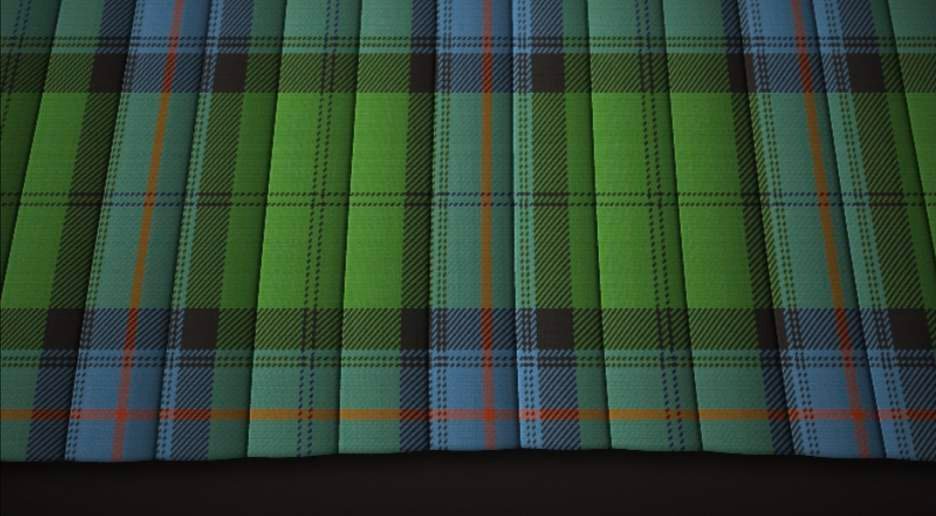
The most famous of the Armstrongs was Johnnie of Gilnockie, whose tower still stands beside the Esk near Canonbie. He was rich, well dressed, and by his own account a loyal subject who only ever robbed Englishmen. He was invited to meet the King at Carlenrig, on the road south of Hawick, and rode up with thirty or forty men in their best clothes, expecting a pardon or a bargain. The ballad, which is the only account the Borders have ever accepted, has him offering the King everything he owned, and being told he was to hang. “I have asked grace at a graceless face,” Johnnie says in the ballad, “but there is none for my men and me.” His family’s name is carried now by a dark green and black cloth, the Armstrong tartan, which the reivers themselves never wore.
They were hanged there and then, all of them, from the trees. There is a stone at Carlenrig, in the corner of the churchyard, that says so. The Borders never forgave James V, and the Armstrongs went on raiding for another seventy years, until the crowns were united in 1603 and there was no border left to raid across.
The name
The Armstrongs claim descent from a man who was armour-bearer to a King of Scots, and who, when the King’s horse was killed under him in battle, lifted him one-handed into his own saddle by the thigh, and was given land in the Borders and the name Armstrong for it. The archives record the story and do not vouch for it. What they do vouch for is that the Armstrongs were the most feared of all the reiving families, that their chief, the Laird of Mangerton, could put three thousand riders in the saddle, and that after 1603 they were broken up, transported, hanged and scattered so thoroughly that there has been no chief since.
Their crest is an arm in armour, holding a sword. Their motto is Invictus maneo, I remain unvanquished. Their clan centre is at Langholm, in Eskdale, the home of the Clan Armstrong Trust, whose collection is now kept in the restored tower at Gilnockie, and in 1979 they held at Tourneyholm, in Liddesdale, what the archives call the first gathering of Armstrongs for four hundred years.
The other Armstrong
By then the name had been to the moon.
Neil Armstrong’s people had come to America from the Borders in the eighteenth century, and when in 1972 the town of Langholm decided to make him its first freeman, he came. On 11 March that year the man who had stepped onto the Sea of Tranquillity three years before stood in the parish church of a small town in Eskdale and was given the freedom of the burgh. He was, by every account, moved. He told the town that he now considered Langholm his home town, and that “the most difficult place to be recognised is in one’s own home town, and I consider this my home town.” Then the town clerk, with a straight face, read out the ancient statute that required any Armstrong found within the burgh to be hanged, and formally repealed it in his case.
He never made much of his Scottish blood in public, and the town has not stopped talking about the day since.
A tartan for a family without one
The reivers wore no tartan. They wore steel bonnets, leather jacks and boots, and the ballads say nothing of cloth. Their tartan came, like almost all Border tartans, from the Vestiarium Scoticum of 1842, that gorgeous invention, and the archives say so plainly: the Armstrongs were a Lowland family and would not traditionally have had a tartan, but the Sobieski Stuarts invented one for them and it took hold, appearing again in the French pattern books of 1880 in a lighter green.
It is a good one. A ground of dark green crossed by a broad band of black and a band of blue, with a fine red line through the blue and another marking the pivot, so that from a distance it reads as a deep green and black check with a flicker of red. Retailers offer Armstrong tartan made to order as kilts, skirts, sashes, scarves and ties, or by the yard, in Modern and Ancient colours, and Armstrong, Armstrang, Fairbairn, Grozier and Nixon are among the names that claim it. Any well-stocked kilts store will carry it, and the better ones make it to measure.
Langholm, the last Friday in July
Dave Armstrong is forty-seven, teaches physics at a high school in Dayton, Ohio, and has driven past the Neil Armstrong museum at Wapakoneta more times than he can count. His family’s tradition is that they are the same Armstrongs. His family’s tradition, as he says himself, is not evidence.
He has come to Langholm for the Common Riding, the day the town rides its boundaries on horseback behind a cornet carrying the flag, with the fair cried in verse from the back of a horse at half past five in the morning, a hound trail, races, emblems of a barley bannock and a salt herring carried through the streets on a pole, and a whole town in the street. It is the kind of thing that cannot be explained to anyone who has not stood in it. He has come because his father wanted to and died before he could. And he has decided to come in a kilt, because his father would have laughed, and because in Langholm, on that Friday, a kilt in the family tartan is the least conspicuous thing a man can wear.
He had never bought one. He thought about hiring and was told, by a colleague from Edinburgh, that a hired kilt is a costume and a made one is clothes. So he looked for a kilts store that would make one to his measurements and send it to Ohio, and settled on Scottish Kilt, whose whole business is the made-to-measure kilt in more than five thousand tartans, and whose website turned out to be, as far as a physics teacher could tell, the most complete kilts store he had found: kilt, jacket, sporran, hose, shoes, belt, pin and knife, all in one place, all of it explained.
He ordered the Armstrong in Ancient colours, because the faded green looked to him like the hills he was going to, eight yards, pleated to the sett. He did not want a jacket. He wanted a tweed waistcoat, a plain shirt with the sleeves rolled, brown hose, a plain brown day sporran and brown brogues, which is the way the Borders wear a kilt on a working holiday, and which the outfitter’s own pages had suggested. It came in six weeks. His wife said he looked like a man who had always owned one.
At half past five on the Friday morning he stands in the street with two thousand people in the half-light and hears the fair cried from horseback, and then the riders go out, and he goes up the hill with the crowd to watch them come back over the Kirk Wynd. Beside him is a man in his seventies in the same tartan.
“Armstrong,” says the man, nodding at the kilt.
“Dave. From Ohio.”
“Ohio.” The man considers this. “You’ll ken about the other one, then.”
“I’ve been to his museum about forty times.”
“He stood in that church,” says the man, pointing down the hill. “1972. I was twenty-two. Town clerk read out the old law that said any Armstrong in the burgh was to be hanged, and then he let him off.” He laughs. “Johnnie of Gilnockie never got let off.”
“No,” says Dave. “I read the ballad.”
“Aye, well. We’re a family that gets hanged or gets to the moon. Not much in between.” The man looks at the Ancient green of Dave’s kilt against the hill. “That’s the right colour for here. The bright one’s for weddings.”
I remain unvanquished
The Armstrongs were hanged from trees at Carlenrig, hunted out of Liddesdale, shipped to Ulster and to America, and told, formally, that they were not welcome in their own town. Four hundred and forty years after Johnnie of Gilnockie asked grace at a graceless face, one of them stood in the church at Langholm having been to the moon, and the town repealed the statute for him.
Their tartan is a Victorian invention in green and black with a thread of red, and it looks entirely at home on a physics teacher from Ohio on the Kirk Wynd at six in the morning, watching the riders come home. Invictus maneo. They were never very good at being vanquished.
