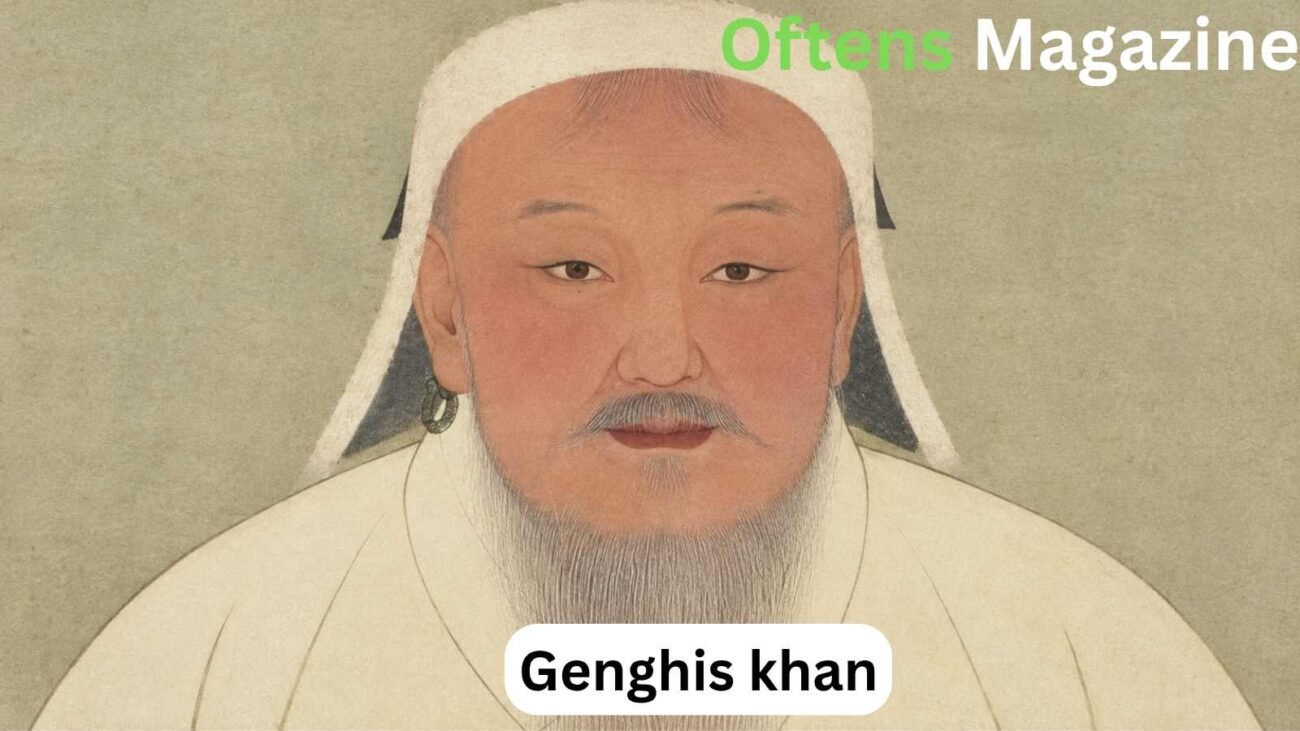
Genghis Khan was one of the most important and influential leaders in world history. Born as Temüjin, he rose from a difficult childhood on the Mongolian steppe to become the founder of the Mongol Empire. Through strong leadership, military skill, and the ability to unite rival Mongol tribes, he created a powerful empire that grew across large parts of Asia.
His life was shaped by war, family, leadership, and ambition. Genghis Khan is remembered not only for his conquests but also for the laws, political systems, and military methods introduced under his rule. His story has remained a major subject of historical interest for centuries, and his descendants continued to expand the Mongol Empire after his death. This article explores his early life, family, rise to power, major conquests, relationships, children, death, and lasting legacy.
Quick Bio of Genghis Khan
| Detail | Information |
| Full Name | Temüjin |
| Known As | Genghis Khan |
| Born | c. 1162 |
| Birthplace | Mongolia |
| Father | Yesügei |
| Mother | Hö’elün |
| Wife | Börte |
| Children | Several children, including Jochi, Chagatai, Ögedei, and Tolui |
| Known For | Founding the Mongol Empire |
| Title | Great Khan |
| Died | 1227 |
| Age at Death | Traditionally estimated to be about 65 |
| Legacy | Founder of the Mongol Empire and one of history’s most influential conquerors |
Who Was Genghis Khan?
Genghis Khan was the founder of the Mongol Empire and one of the most powerful rulers of the medieval world. He was born as Temüjin in Mongolia and grew up during a time when different Mongol tribes often fought against one another. His early life was difficult, especially after the death of his father, but these struggles helped shape his skills as a leader.
As he grew older, Temüjin built alliances, gained loyal followers, and defeated rival groups. In 1206, Mongol leaders recognized him as their supreme ruler and gave him the title Genghis Khan. Under his leadership, the Mongols began building a vast empire that later expanded far beyond Mongolia.
Genghis Khan rose from a difficult childhood to become the founder of the Mongol Empire.
What Was Genghis Khan’s Real Name?
Genghis Khan’s birth name was Temüjin (also written Temuchin or Temüjin in different spellings). He was born into the Borjigin clan, a group that played an important role in Mongol history. The exact year of his birth is debated, although 1162 is commonly used.
He did not begin life with the name Genghis Khan. The title came later, in 1206, when Temüjin had defeated or brought many rival groups under his control and was recognized as the supreme ruler of the Mongols. The meaning and exact origin of the title “Genghis Khan” have been debated by historians.
Temüjin was the name he was born with, while Genghis Khan was the title he received after becoming the Mongols’ supreme leader.
Genghis Khan’s Early Life and Family
Temüjin was born into a family connected to the Mongol tribal leadership. His father, Yesügei, was a chieftain, while his mother, Hö’elün, came from the Olkhonud clan. His childhood changed dramatically when his father died while Temüjin was still young. After Yesügei’s death, many of his followers left the family, leaving Hö’elün to raise her children in extremely difficult conditions.
The family survived by hunting, fishing, and gathering food. Temüjin also faced conflict with rival groups and was captured by the Tayichiud at one point before escaping. These experiences exposed him to the harsh realities of life on the Mongolian steppe and helped him understand the importance of loyalty, alliances, and strong leadership.
Genghis Khan’s difficult childhood strongly shaped the leader he later became.
Who Were Genghis Khan’s Parents?
Genghis Khan was the son of Yesügei and Hö’elün. Yesügei was a Mongol chieftain from the Borjigin clan, while Hö’elün became an important influence in Temüjin’s early life. After Yesügei’s death, Hö’elün played a major role in keeping her children alive and together despite losing much of the family’s support.
Temüjin learned important lessons from his mother about surviving in a difficult environment and building strong relationships with others. Later in life, his ability to form alliances became an important part of his rise to power.
Yesügei gave Temüjin his early connection to Mongol leadership, while Hö’elün helped him survive his difficult youth.
How Did Genghis Khan Become a Leader?
Temüjin’s path to leadership was not simple. After his father’s death, his family lost the support of many of Yesügei’s followers. Instead of giving up, Temüjin gradually built a group of loyal companions and allies. He also formed important relationships with powerful leaders and warriors, which helped him increase his influence among the Mongol tribes.
He faced several defeats and setbacks before becoming the leading figure among the Mongols. His ability to gain followers, create alliances, and defeat rivals helped him strengthen his position. By 1206, he had gained enough power and support for Mongol leaders to recognize him as their supreme ruler.
Temüjin became a leader by building alliances, earning loyal followers, and overcoming rival groups.
How Did Genghis Khan Unite the Mongol Tribes?
Before Genghis Khan’s rise, the Mongolian steppe was divided among different tribes and political groups that often fought each other. Temüjin worked to change this situation by forming alliances, attracting followers, and defeating groups that opposed him. He also developed strong relationships with influential leaders and warriors.
Over time, his victories and growing influence allowed him to bring more tribes under his authority. In 1206, a major assembly of Mongol leaders recognized Temüjin as the supreme ruler and gave him the title Genghis Khan. This marked an important turning point because the different groups were brought together under one powerful leadership, creating the foundation of the Mongol Empire.
Genghis Khan united the Mongol tribes through alliances, leadership, and military victories, creating the foundation of his empire.
How Did Genghis Khan Build His Empire?
Genghis Khan built his empire through a combination of military victories, political alliances, and strong leadership. After uniting many Mongol tribes in 1206, he turned his attention beyond the Mongolian steppe. His armies first fought powerful neighboring states, including the Western Xia and Jin dynasties in northern China. He later expanded westward into Central Asia, where his forces defeated the Khwarazmian Empire.
Genghis Khan did not rely only on battles to expand his power. He also used alliances, diplomacy, trade relationships, and systems of loyalty to strengthen his rule. Conquered territories were placed under Mongol authority, while skilled people from different regions were sometimes brought into the empire to serve the administration or military. By the time of his death in 1227, the Mongol Empire had become a huge territory stretching across much of Asia.
Genghis Khan built his empire through conquest, alliances, organization, and strong central leadership.
What Lands Did Genghis Khan Conquer?
Genghis Khan expanded Mongol rule across a large part of Asia during his lifetime. His campaigns included the Western Xia in northwestern China, the Jin dynasty in northern China, and the Khwarazmian Empire across parts of Central Asia. His forces also moved into areas of present-day Iran, Afghanistan, and other parts of Central Asia.
His conquests created the foundation for an empire that continued to grow after his death. However, not every part of the later Mongol Empire was conquered personally by Genghis Khan. His sons and later Mongol rulers continued expanding the territories he had established.
Genghis Khan conquered major parts of China and Central Asia, creating the foundation of a much larger Mongol Empire.
Genghis Khan’s Army and Military Strategies
Genghis Khan’s army was known for its speed, discipline, and organization. Mongol forces were largely made up of highly skilled horsemen who could travel long distances quickly. Soldiers were organized into groups of different sizes, creating a clear chain of command. This structure helped the army move and fight as a coordinated force rather than as separate tribal groups.
The Mongols also used flexible battlefield tactics. They could make rapid movements, surround an opponent, and use feigned retreats to draw enemies away from their positions. Genghis Khan also adopted useful military knowledge and technology from conquered peoples, including siege techniques that helped his forces attack fortified cities.
Genghis Khan’s military success came from speed, discipline, organization, and flexible battle tactics.
Who Was Genghis Khan’s Wife Börte?
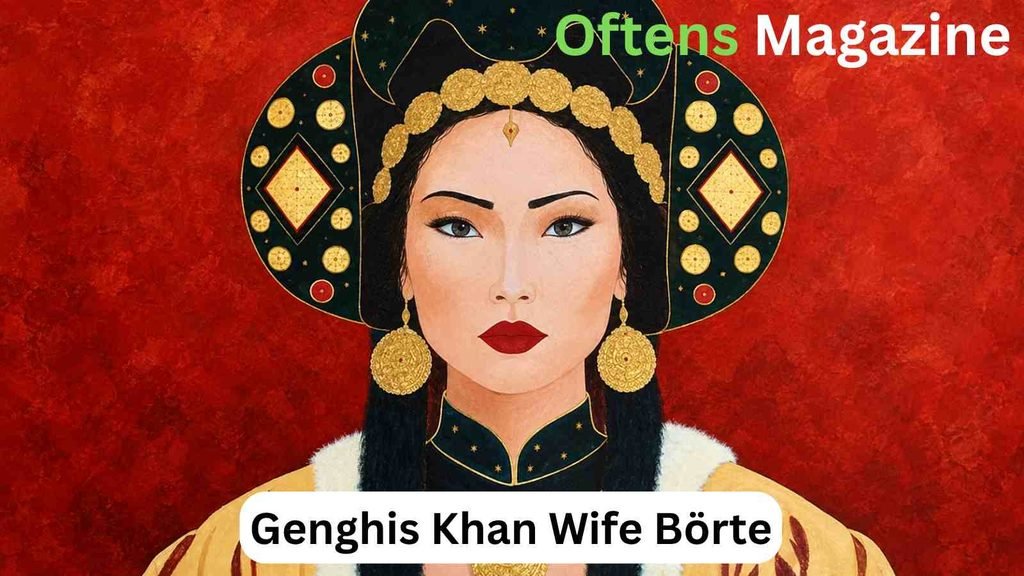
Börte was Genghis Khan’s principal wife and an important person in his family life. Temüjin married Börte when they were young, following an arrangement between their families. Their marriage lasted through many difficult periods, including times when Temüjin was still struggling to build his power.
Börte was captured by the Merkit people early in their marriage and was later rescued by Temüjin and his allies. She remained his principal wife and became the mother of several of his children. Her position was important within the Mongol ruling family, and her sons later played major roles in the expansion of the empire.
Börte was Genghis Khan’s principal wife and the mother of several of his most important children.
How Many Children Did Genghis Khan Have?
Genghis Khan and Börte had four sons and several daughters. His four sons were Jochi, Chagatai, Ögedei, and Tolui. These sons became important figures in the Mongol Empire, and three of them Chagatai, Ögedei, and Tolui received major territories and responsibilities after their father’s conquests.
Genghis Khan also had children with other wives and consorts. Historical records do not provide a simple, complete number for all of his children, so it is better to focus on the children whose identities are clearly recorded. His family became central to the continuation of Mongol rule across generations.
Genghis Khan had several children, with his four sons by Börte playing major roles in Mongol history.
Who Were Genghis Khan’s Sons?
Genghis Khan’s four sons with Börte were Jochi, Chagatai, Ögedei, and Tolui. Each became an important member of the Mongol ruling family. Jochi was the eldest, while Chagatai was known for his role in governing territories in Central Asia. Ögedei was later chosen to succeed Genghis Khan as Great Khan.
Tolui, the youngest of the four, also held an important position in the empire. After Genghis Khan died in 1227, these sons and their descendants helped maintain and expand Mongol power. The different branches of the family eventually ruled large parts of the empire.
Genghis Khan’s sons became key figures in carrying his empire and ruling family into the next generation.
Genghis Khan’s Laws and Leadership
Genghis Khan introduced rules and systems that helped bring order to the Mongol tribes and his growing empire. He is often associated with the Yassa, a set of rules and commands linked to his rule. However, the exact form and contents of the Yassa are difficult to establish because no complete contemporary text of it survives.
His leadership also placed strong importance on loyalty, military discipline, and service to the ruler. He promoted people based partly on ability and loyalty rather than relying only on tribal background. He also supported trade and communication across the territories under Mongol control, helping his expanding empire function across great distances.
Genghis Khan strengthened his empire through strict organization, loyalty, discipline, and systems of rule.

What Was Genghis Khan’s Religion?
Genghis Khan followed the traditional spiritual beliefs of the Mongols, which centered on Tengri, the Eternal or Blue Heaven. Mongol religious beliefs also included shamanism, ancestor worship, and respect for natural forces such as the sky, earth, mountains, and water. Shamans were important because they were believed to communicate with the spirit world and perform religious rituals.
Genghis Khan did not belong to Islam, Christianity, or Buddhism. He respected different religious traditions within his growing empire and generally allowed people to practice their own faith. His own beliefs were closely connected to the Mongol tradition of worshipping Eternal Heaven and seeking spiritual guidance from the natural world.
Genghis Khan followed the traditional Mongol belief system centered on Tengri and shamanic practices.
How Did Genghis Khan Die?
Genghis Khan died in 1227 while he was campaigning against the Western Xia in northwestern China. The exact cause of his death remains uncertain. Historical accounts give different explanations, and there is no single explanation that can be stated with certainty. Some accounts connect his death with an illness after a fall from a horse, but the details remain debated.
His death was kept secret from the Mongol army until the campaign against the Western Xia had ended. He was about 60 years old, depending on which traditional birth date is used. His death did not end Mongol expansion because his successors continued to rule and expand the empire.
Genghis Khan died in 1227 during his campaign against the Western Xia, but the exact cause of death is uncertain.
Where Was Genghis Khan Buried?
The exact location of Genghis Khan’s grave remains unknown. After his death, his body was taken back toward Mongolia, and his burial place was deliberately kept secret. Historical accounts connect his burial with the area around Burkhan Khaldun, a sacred mountain in Mongolia.
Many searches and archaeological efforts have tried to identify his tomb, but no location has been established as his confirmed burial site. The secrecy surrounding his burial has helped make the subject one of the enduring mysteries connected with his life.
Genghis Khan was buried in Mongolia, but the exact location of his grave is still unknown.
What Happened to the Mongol Empire After His Death?
Genghis Khan had already made plans for the future of his empire before his death. His sons Jochi, Chagatai, Ögedei, and Tolui were given different territories and responsibilities. Ögedei Khan eventually became the second Great Khan in 1229 and continued the expansion of the empire.
Under later Mongol rulers, the empire grew even larger. Mongol armies expanded into parts of Eastern Europe, the Middle East, and China. Over time, however, the empire became divided into several major khanates, including the Golden Horde, the Chagatai Khanate, the Ilkhanate, and the Yuan dynasty in China.
The Mongol Empire continued to expand after Genghis Khan but eventually became divided into separate khanates.
Genghis Khan’s Children and Descendants
Genghis Khan had several children, with his four sons by Börte Jochi, Chagatai, Ögedei, and Tolui—holding especially important positions in the Mongol ruling family. His sons and their descendants controlled different parts of the empire after his death.
His descendants continued Mongol expansion for generations. One of the most famous was his grandson Kublai Khan, who completed the Mongol conquest of China and established the Yuan dynasty. Other descendants ruled territories across Central Asia, Russia, Iran, and surrounding regions.
Genghis Khan’s descendants continued to rule large parts of Asia for generations after his death.
Genghis Khan’s Legacy and Impact
Genghis Khan left a major mark on world history. He transformed the divided Mongol tribes into a powerful political and military state and created the foundation of the Mongol Empire. His campaigns changed the political map of much of Asia and connected distant regions under Mongol rule.
His legacy is complex. He is remembered for extraordinary military organization and empire-building, while the Mongol conquests also involved large-scale destruction and loss of life. His descendants expanded the empire even further, and Mongol rule influenced trade, communication, government, and cultural exchange across much of Eurasia.
Genghis Khan’s legacy combines the creation of a vast empire with major and lasting changes across Eurasia.
Frequently Asked Questions
1. What was Genghis Khan’s real name?
His birth name was Temüjin. He received the title Genghis Khan after becoming the supreme ruler of the Mongols in 1206.
2. When did Genghis Khan die?
Genghis Khan died in 1227 during his campaign against the Western Xia.
3. What religion did Genghis Khan follow?
He followed traditional Mongol beliefs centered on Tengri, along with shamanic and ancestor-worship practices.
4. Who was Genghis Khan’s wife?
His principal wife was Börte, who was the mother of his four famous sons: Jochi, Chagatai, Ögedei, and Tolui.
5. Where was Genghis Khan buried?
His exact burial place is unknown. Historical accounts associate it with the area around Burkhan Khaldun in Mongolia.
6. Who succeeded Genghis Khan?
His son Ögedei Khan became the second Great Khan in 1229 and continued the expansion of the Mongol Empire.
Conclusion
Genghis Khan rose from a difficult childhood on the Mongolian steppe to become the founder of one of history’s largest empires. He united rival Mongol tribes, built a powerful military system, and expanded Mongol rule across large parts of Asia.
His story did not end with his death in 1227. His sons, grandchildren, and later descendants continued to expand and govern Mongol territories for generations. Today, Genghis Khan remains an important historical figure whose life, conquests, leadership, and legacy continue to shape the study of medieval Eurasia.
