
When you hear the name “Kroc,” you immediately think of McDonald’s golden arches and the fast-food empire that changed the world. But behind the billion-dollar success story lies a quieter, lesser-known chapter the life of Marilyn Kroc Barg, the only daughter of McDonald’s founder Ray Kroc. Unlike her famous father, Marilyn chose a path far removed from boardrooms and business deals. This is the story of a woman who valued compassion over corporate fame, a philanthropist whose legacy continues to touch millions of lives today.
She was not a businesswoman or a celebrity she was a quiet force of kindness who changed the world without ever seeking the spotlight.
Quick Facts About Marilyn Kroc Barg
| Detail | Information |
| Full Name | Marilyn Janet Lynn Kroc Barg |
| Born | October 15, 1924, in Chicago, Illinois |
| Died | September 11, 1973, in Arlington Heights, Illinois |
| Age at Death | 48 years old |
| Parents | Ray Kroc and Ethel Janet Fleming |
| Siblings | None (only child) |
| First Marriage | Sylvester Nordly Nelson (1949, divorced) |
| Second Marriage | Walter James Barg (1960–1973) |
| Known For | Philanthropy, Ronald McDonald House Charities |
| Net Worth at Death | Approximately $500,000 to $1 million |
| Burial | Memorial Park Cemetery, Skokie, Illinois |
Early Life and Family Background
Marilyn Janet Lynn Kroc was born on October 15, 1924, in Chicago, Illinois, into a family that would later become synonymous with American fast food. Her father, Ray Kroc, was working as a paper cup salesman at the time, and her mother, Ethel Janet Fleming, was a former silent film actress who had given up her career to focus on family. As an only child, Marilyn received her parents’ undivided attention, growing up in the bustling city of Chicago during the jazz age. Her early years were modest, as Ray had not yet acquired the McDonald’s franchise that would make their family name globally recognized.
Ethel Fleming played a crucial role in shaping Marilyn’s character, providing stability and instilling values of humility and kindness. Ray’s constant work and frequent travel meant he was often absent from home, so Marilyn spent much of her childhood with her mother. She developed a love for horses and the arts, interests that would remain with her throughout her life. Despite her father’s later fame, Marilyn was raised to value substance over status—a lesson that guided her choices in adulthood.
She was an only child, and she carried that unique position with grace throughout her entire life.
Growing up in the 1920s and 1930s, Marilyn witnessed her family’s financial ups and downs. Ray Kroc worked as a salesman for the Lily-Tulip Cup Company before eventually selling Multimixers machines that could mix multiple milkshakes at once. These early experiences of humble beginnings helped shape Marilyn’s grounded personality. She learned the value of hard work from her father, though she would apply that lesson in very different ways than he did.
Marilyn’s childhood taught her that true wealth is not measured in dollars, but in the values you carry with you.
Relationship With Her Father, Ray Kroc
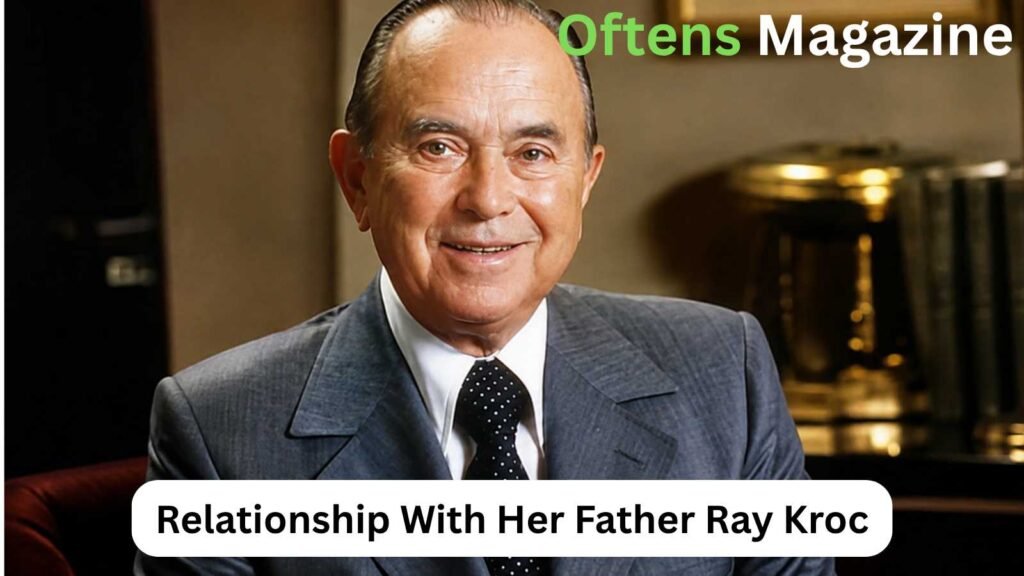
Ray Kroc is remembered as the visionary who transformed a small California burger restaurant into the global McDonald’s empire. He acquired McDonald’s in 1961, and by the time of his death in 1984, the company had over 7,500 locations in the United States alone. Despite his massive success, Ray’s relationship with his only daughter was complex, largely due to his all-consuming business ambitions.
Marilyn’s father was often away traveling for work, and this distance created a dynamic where she spent more time with her mother than with him. Ray was a hard-driving businessman known for his relentless determination, qualities that made him incredibly successful but also left little time for family life. Marilyn observed his ambition but chose a path that prioritized personal connections and quiet contributions over corporate conquest.
Despite her father’s fortune and fame, Marilyn never sought a role in the McDonald’s business.
This decision set her apart from what many might expect of a billionaire’s child. She simply had no interest in franchise expansions, board meetings, or the corporate spotlight. Instead, Marilyn asked herself a different question how could she use her resources and position to help people who were suffering? This fundamental difference in values would define her legacy.
Ray Kroc’s success brought immense wealth to the family, but Marilyn remained remarkably down-to-earth. She carried the Kroc name without seeking its privileges, and she built her own identity through charity and compassion rather than commerce. When she passed away, Ray lost his only child a personal tragedy he mourned privately, as the family chose to keep such details out of the public eye.
Marilyn proved that you can carry a famous name while writing your own story one defined not by business, but by humanity.
Marriages and Personal Life
Marilyn married twice in her lifetime, each relationship reflecting her desire for a peaceful, private existence far from media attention. Her first marriage was to Sylvester Nordly Nelson, a World War II veteran from Minnesota, in 1949. Sylvester served in the 363rd Infantry during the war, and he was the son of Edward S. Nelson and Hanna E. Nordly Nelson. This union was relatively short-lived, and they eventually divorced. After this separation, Marilyn remained out of the public eye, choosing privacy over gossip.
In 1960, Marilyn found love again and married Walter James Barg. This second marriage proved much more enduring and provided the stability and partnership she had been seeking. Taking his surname, she became Marilyn Kroc Barg the name by which she is remembered today. Walter supported Marilyn’s charitable passions, and together they built a warm, modest life in Arlington Heights, Illinois.
Marilyn chose community over celebrity and privacy over publicity.
Her second marriage lasted until her untimely passing in 1973. Walter James Barg mourned her deeply, and he lived until 1984. By all accounts, their home was filled with warmth rather than the flashiness that sometimes accompanies great wealth. Marilyn’s personal life reflected her core belief that true happiness comes not from fame but from meaningful relationships and service to others.
Marilyn kept her personal affairs strictly private. She rarely appeared in press interviews or at public events, cultivating a life rooted in family, personal interests, and philanthropy rather than celebrity. Her love for horses and equestrian pursuits brought her particular joy, and she dedicated much time to riding, showing, and breeding horses. These activities provided an escape from the weight of the Kroc name and allowed her to express her individuality.
In a world obsessed with fame, Marilyn found her greatest joy in the quiet momentswith horses, with family, and with purpose.
Did Marilyn Kroc Barg Have Children?
No. There are no confirmed public records indicating that Marilyn Kroc Barg had any children.
This question often arises because Marilyn was married twice, leading some to assume she might have started a family. However, all credible biographical sources confirm that she did not have children. Despite her two marriages, Marilyn never became a mother. This fact is well-documented across multiple authoritative sources, and there is no evidence to suggest otherwise.
The absence of children in Marilyn’s life makes her philanthropic work even more significant.
She channeled her nurturing instincts into helping families with seriously ill children through the Ronald McDonald House Charities. Her legacy of compassion continues to touch countless children and families, even though she never had biological offspring of her own.
She gave her love not to children of her own, but to the families of children in medical crisis.
This selfless approach to caring for others remains one of the most remarkable aspects of her story. Marilyn understood family struggles on a deeply personal level, perhaps precisely because she never experienced parenthood herself. Her empathy for families facing medical crises drove her to create a lasting support system that has now helped millions worldwide.
Not having children of her own did not stop Marilyn from becoming a mother figure to millions of families in need.
Philanthropic Legacy and the Ronald McDonald House
Marilyn Kroc Barg’s most enduring legacy is her instrumental role in the founding of Ronald McDonald House Charities (RMHC). This organization provides affordable, comfortable housing for families with seriously ill children who need to be near hospitals for extended treatment. The idea began in the early 1970s when families with hospitalized children often slept on hospital chairs and ate vending machine food because hotel costs were too high a heartbreaking reality that Marilyn was determined to change.
The first Ronald McDonald House opened in Philadelphia on October 15, 1974 Marilyn’s 50th birthday. This timing was more than coincidence; it symbolized Marilyn’s vision and commitment to helping families in crisis. She didn’t just write checks to charity she helped create a model of care that revolutionized how we support families facing medical emergencies. The concept was simple but powerful: provide families with free or low-cost accommodation near children’s hospitals, home-cooked meals in shared kitchens, and a supportive community to help them through difficult times.
Marilyn’s involvement in this charity stemmed from her deep empathy for families with sick children, a cause she was personally connected to due to her own health challenges. Her battle with diabetes gave her firsthand understanding of chronic illness, fueling her desire to help others navigating similar struggles. Beyond RMHC, Marilyn also supported the Salvation Army’s holiday programs, medical research for diabetes, education scholarships, and the arts.
Her commitment to philanthropy was not just financial it was deeply personal and hands-on. Marilyn used her position of influence to promote causes that could make a tangible difference in the world. Whether through political activism, fundraising for leaders like President Nixon and President Reagan, or donating to medical and educational institutions, Marilyn dedicated herself to improving the lives of others. Her work continues to impact millions of families who benefit from Ronald McDonald House Charities every year.
Marilyn Kroc Barg did not build a business empire she built a sanctuary for families in their darkest hours.
Also Read: Harlene Rosen: The Untold Story of Woody Allen’s First Wife
Cause of Death and Final Years
Marilyn Kroc Barg passed away on September 11, 1973, at the age of 48. Her death occurred in Arlington Heights, Illinois, due to complications from diabetes. She had been battling the disease for years, and ultimately, it claimed her life far too early. Like her life, her passing was relatively quiet and unassuming, away from the media spotlight that followed her famous father.
In her final years, Marilyn focused on family, charitable work, and her passion for equestrian activities. She remained largely private, avoiding media attention and instead dedicating her time to meaningful personal projects and causes close to her heart. Her health struggles did not stop her from giving back, and she continued her philanthropic efforts until the very end.
Her passing in 1973 came at a time when her father’s business empire was still expanding rapidly.
Ray Kroc, who continued expanding McDonald’s in the years that followed, mourned the loss of his only child deeply a personal tragedy he largely kept private. Marilyn was laid to rest at Memorial Park Cemetery in Skokie, Illinois, where she remains today. Though her life was brief, her legacy through the Ronald McDonald House Charities continues to grow and help families around the world.
Marilyn left this world too soon, but she left behind a gift that keeps giving comfort to families who need it most.
Marilyn Kroc Barg vs. Joan Kroc: Why the Confusion?
Many people confuse Marilyn Kroc Barg with Joan Kroc, her stepmother, who was Ray Kroc’s third wife. This confusion is understandable both women carried the famous Kroc name, both were associated with McDonald’s, and both were philanthropists. However, they lived very different lives and had distinct roles in the family.
Marilyn was Ray’s biological daughter from his first marriage to Ethel Fleming. Joan Kroc (née Joan Beverly Mansfield) was Ray’s third wife, whom he married in 1969. Joan is the one who became a major philanthropist after Ray’s death, famously donating $1.5 billion to the Salvation Army and other causes. She lived until 2003, long after Marilyn had passed away.
Marilyn was Ray Kroc’s daughter. Joan Kroc was his third wife. They were different generations, with different stories.
The confusion is further fueled by the fact that Joan’s philanthropic work was widely publicized, while Marilyn quietly contributed to charitable causes without seeking recognition. Joan was often in the media spotlight, especially after Ray’s death, while Marilyn lived a deliberately private life. As a result, many people mistakenly attribute Joan’s later charitable achievements to Marilyn, or vice versa.
Another misconception involves Ray’s other relationships. Some sources mistakenly claim that Joan Kroc was Marilyn’s mother, but this is factually incorrect. Ethel Fleming was Marilyn’s biological mother, and Joan Kroc became her stepmother only after Marilyn was already an adult. Understanding these distinctions helps clarify the narrative of Ray Kroc’s complicated family story.
Do not confuse the daughter with the stepmother both were remarkable women, but their stories are entirely their own.
Marilyn Kroc Barg’s Net Worth and Inheritance
At the time of her death in 1973, Marilyn Kroc Barg’s net worth was estimated between $600,000 and $1 million. This was a significant amount for the era, though modest compared to her father’s vast fortune, which grew substantially after McDonald’s global expansion in the following decades. It’s important to note that her net worth reflected her personal assets, not the full Kroc family wealth.
Marilyn inherited money from her father’s early successes, but she used it primarily for charitable causes.
Unlike many wealthy heirs, Marilyn didn’t use her inheritance for extravagant living. Instead, she channeled her resources into philanthropy, medical research, education scholarships, and the arts. Her will and estate plans reflected her lifelong commitment to helping others, though she passed away before much of the family’s largest wealth was accumulated in the 1970s and 1980s.
When Ray Kroc eventually passed away in 1984, he left behind an estimated $600 million fortune. However, Marilyn had already passed away a decade earlier, so she never inherited from his later success. The bulk of the Kroc fortune eventually went to Joan Kroc, Ray’s third wife, and to various charitable foundations. Marilyn’s legacy was never about money—it was about the compassionate institutions she helped build and the millions of families her work continues to support.
Marilyn’s true net worth was never measured in dollars it was measured in the lives she touched and the hope she gave.
Frequently Asked Questions
1. Who was Marilyn Kroc Barg?
Marilyn Kroc Barg was the only daughter of Ray Kroc, the founder of McDonald’s, and his first wife Ethel Janet Fleming. She was a philanthropist who played a key role in establishing the Ronald McDonald House Charities. She lived a private life and passed away in 1973 at age 48.
2. Did Marilyn Kroc Barg work at McDonald’s?
No, she never worked at McDonald’s. Marilyn had no interest in the family business or corporate life. She chose to focus on her personal passions and charitable work instead.
3. How did Marilyn Kroc Barg die?
She died from complications related to diabetes on September 11, 1973. She was 48 years old at the time of her death. She passed away in Arlington Heights, Illinois.
4. Was Marilyn Kroc Barg related to Joan Kroc?
Yes, Joan Kroc was her stepmother. Joan was Ray Kroc’s third wife, whom he married in 1969. Marilyn’s biological mother was Ethel Fleming, Ray’s first wife.
5. Did Marilyn Kroc Barg have any siblings?
No, Marilyn was an only child. Ray Kroc and Ethel Fleming had no other children together. She had no biological or adopted siblings.
6. Did Marilyn Kroc Barg have children?
No, she did not have any children. Despite being married twice, there are no confirmed records of her having any offspring. She channeled her nurturing instincts into her philanthropic work instead.
7. Where is Marilyn Kroc Barg buried?
She is buried at Memorial Park Cemetery in Skokie, Illinois. Her grave remains a quiet testament to her humble and private nature.
8. What is Marilyn Kroc Barg known for?
She is best known for her philanthropic work, particularly her role in founding the Ronald McDonald House Charities. This organization provides housing and support for families with seriously ill children. Her legacy continues to help millions of families worldwide.
Conclusion
Marilyn Kroc Barg was a woman of quiet strength and deep compassion. While her father, Ray Kroc, built the world’s most famous fast-food empire, Marilyn chose a path of charity and service that touched millions of lives in ways far more meaningful than a hamburger or a franchise deal. Her legacy, particularly her role in the founding of Ronald McDonald House Charities, continues to help families with seriously ill children find comfort, community, and hope during their most difficult moments.
Though she lived only 48 years and maintained a fiercely private life, Marilyn’s impact endures. She showed that wealth can be used not just to build businesses but to build communities not just to gain fame but to give comfort. She chose empathy over empire, and in doing so, she created a legacy that has outlasted many corporate achievements. The golden arches may be recognized by billions, but Marilyn Kroc Barg’s quiet compassion has touched lives in ways that truly matter.
In a world often obsessed with celebrity and fortune, Marilyn’s life offers a powerful lesson in humility, generosity, and purpose. She never sought the spotlight, yet her light continues to shine through the millions of families who have found shelter and support because of her vision. That is a legacy far more valuable than any net worth.
